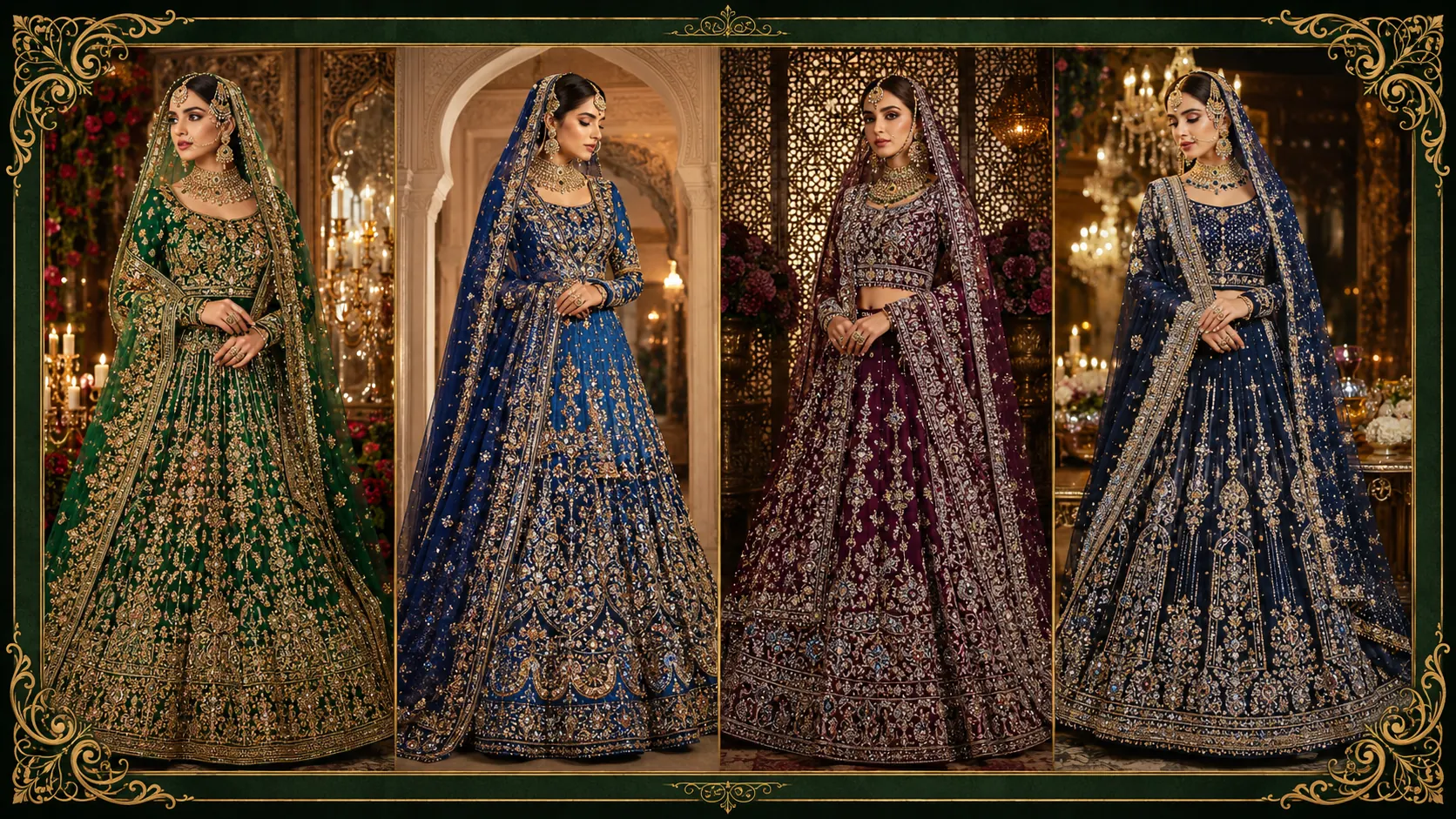
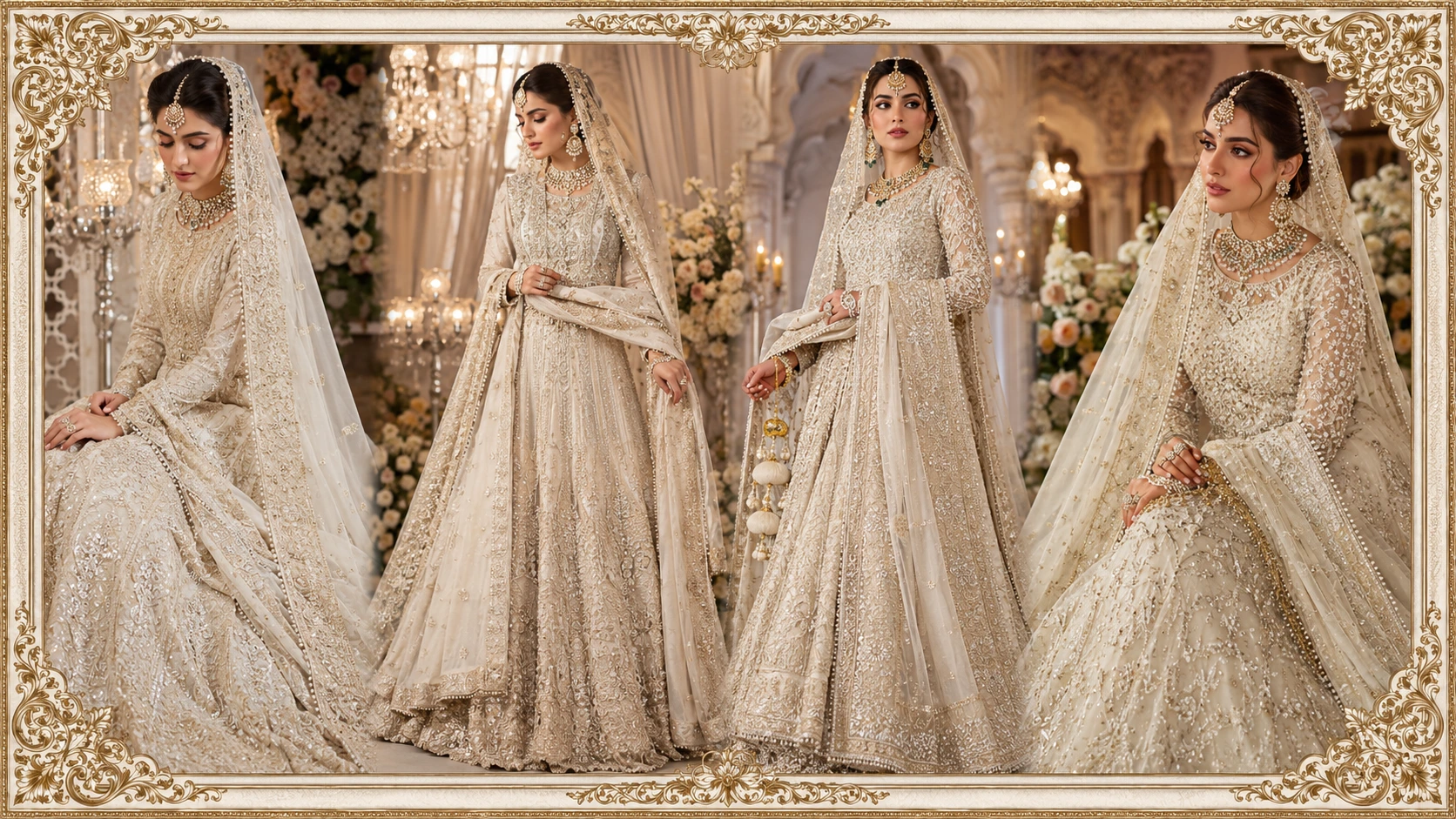
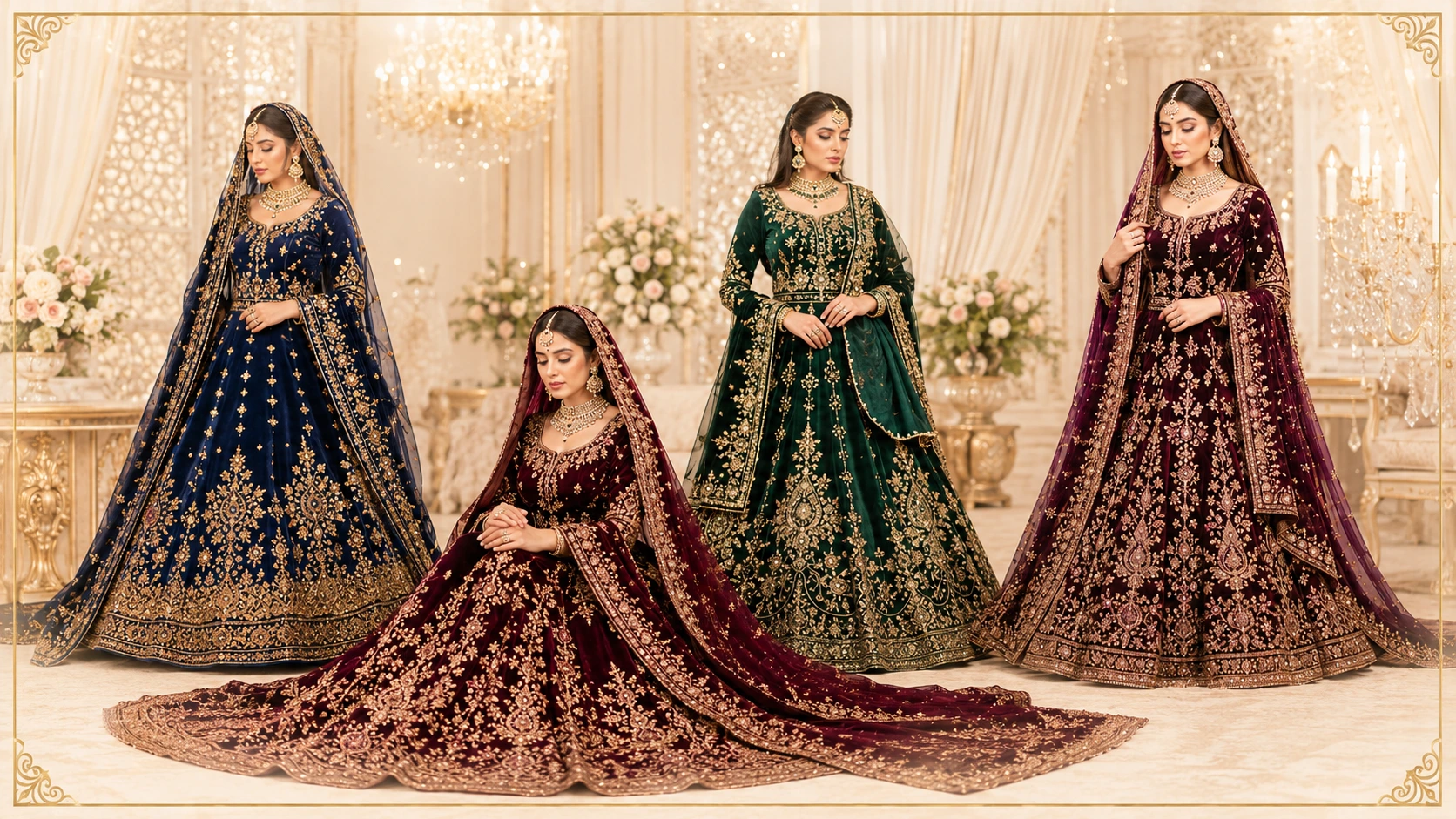
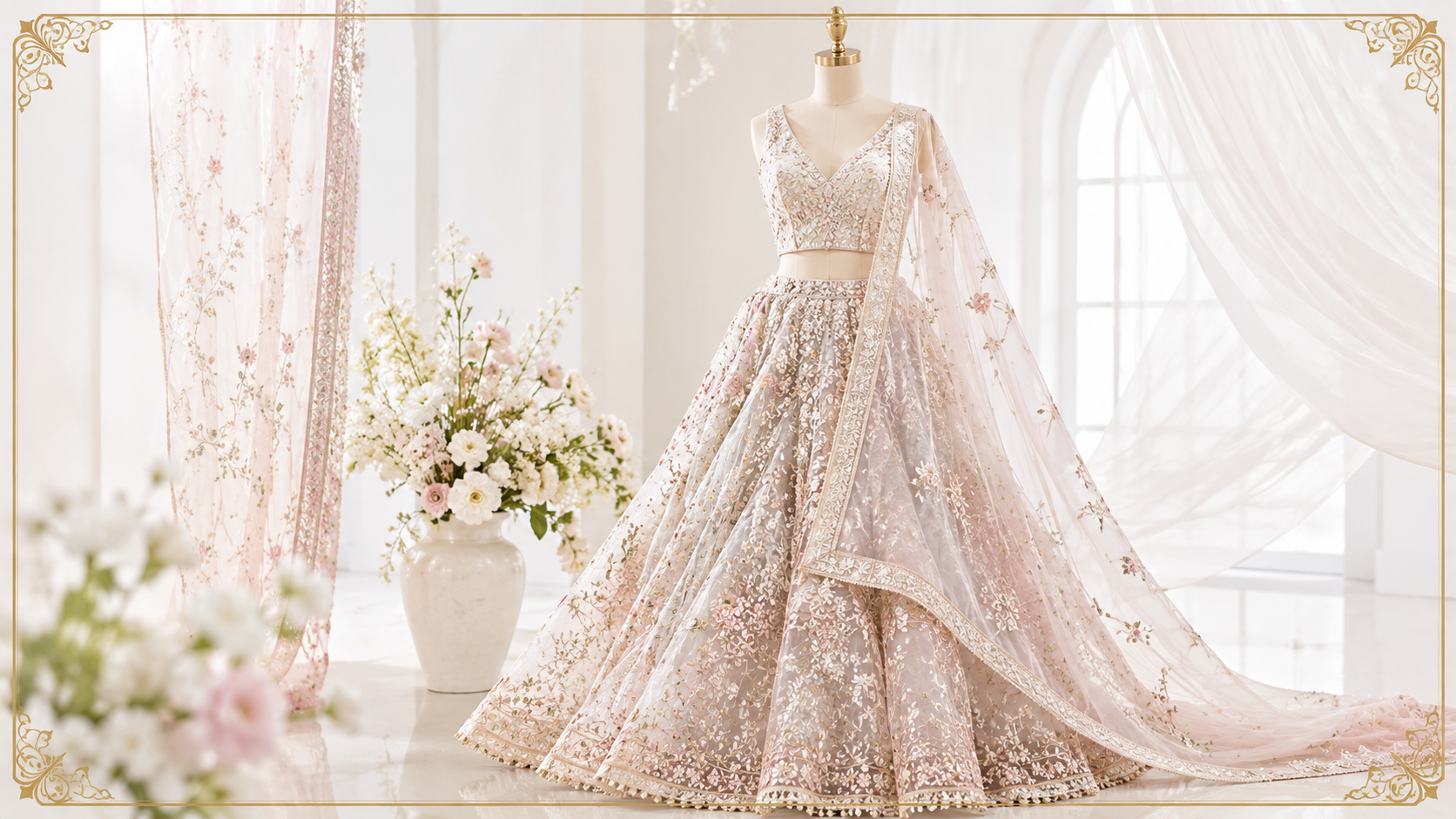
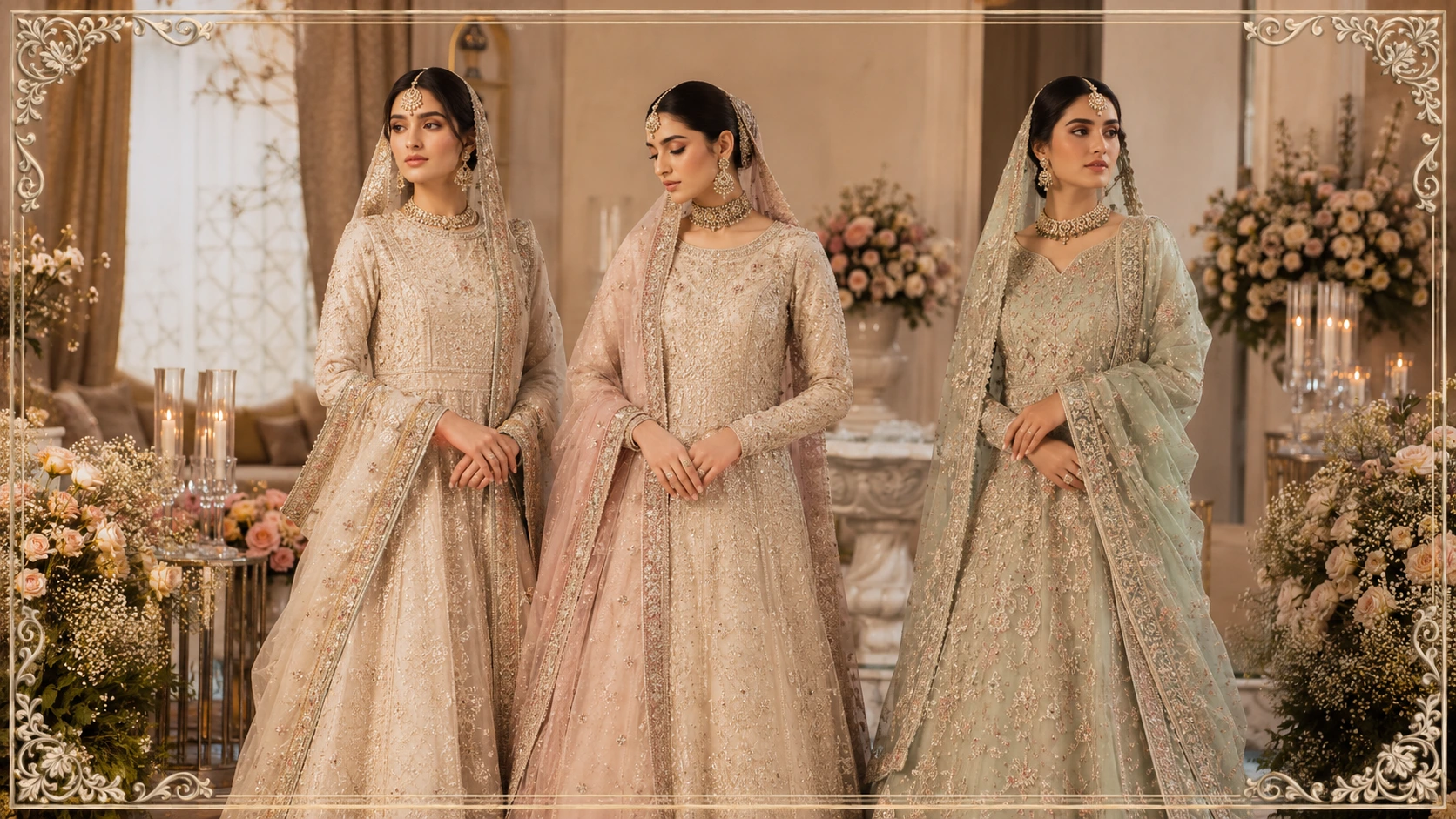
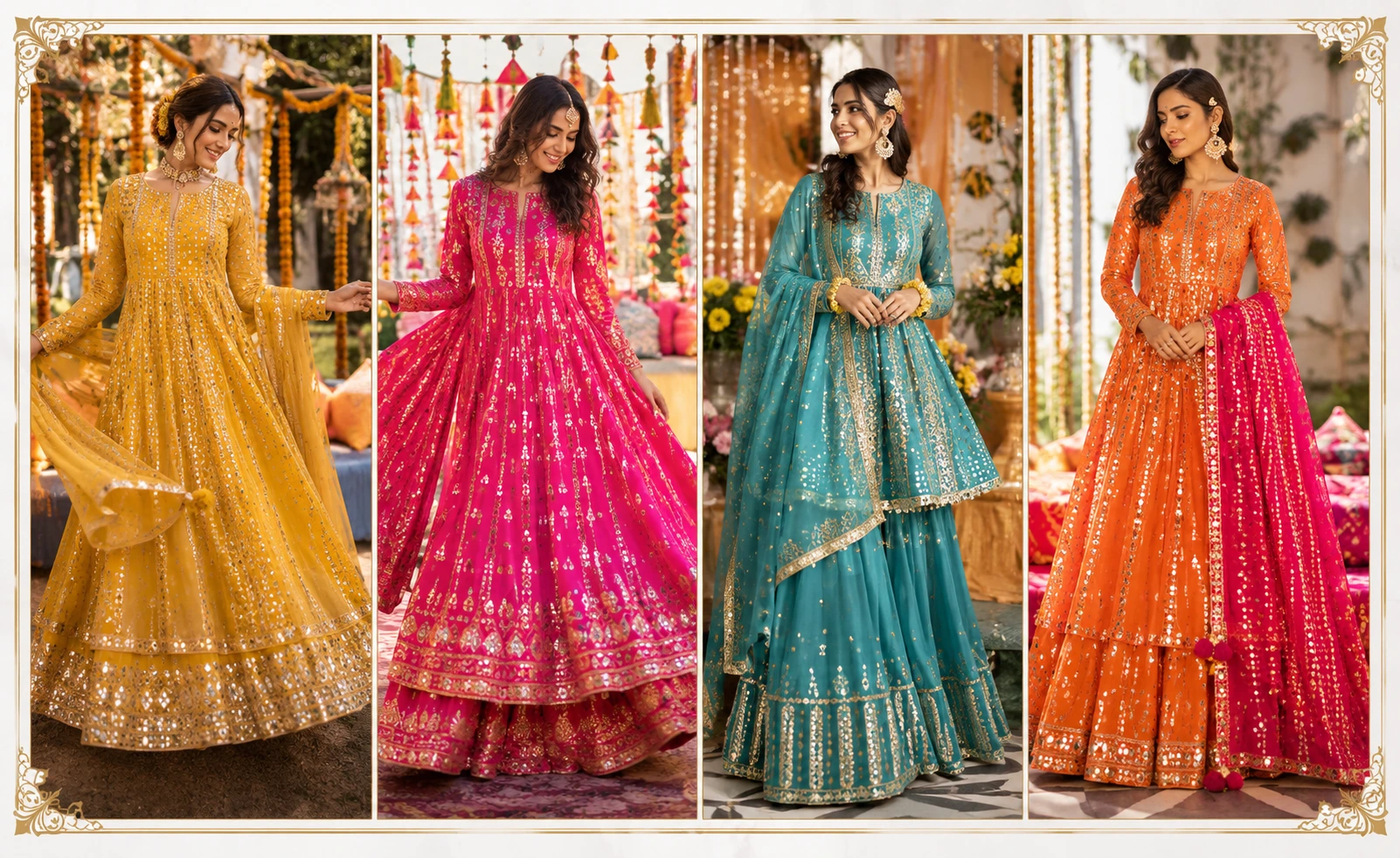
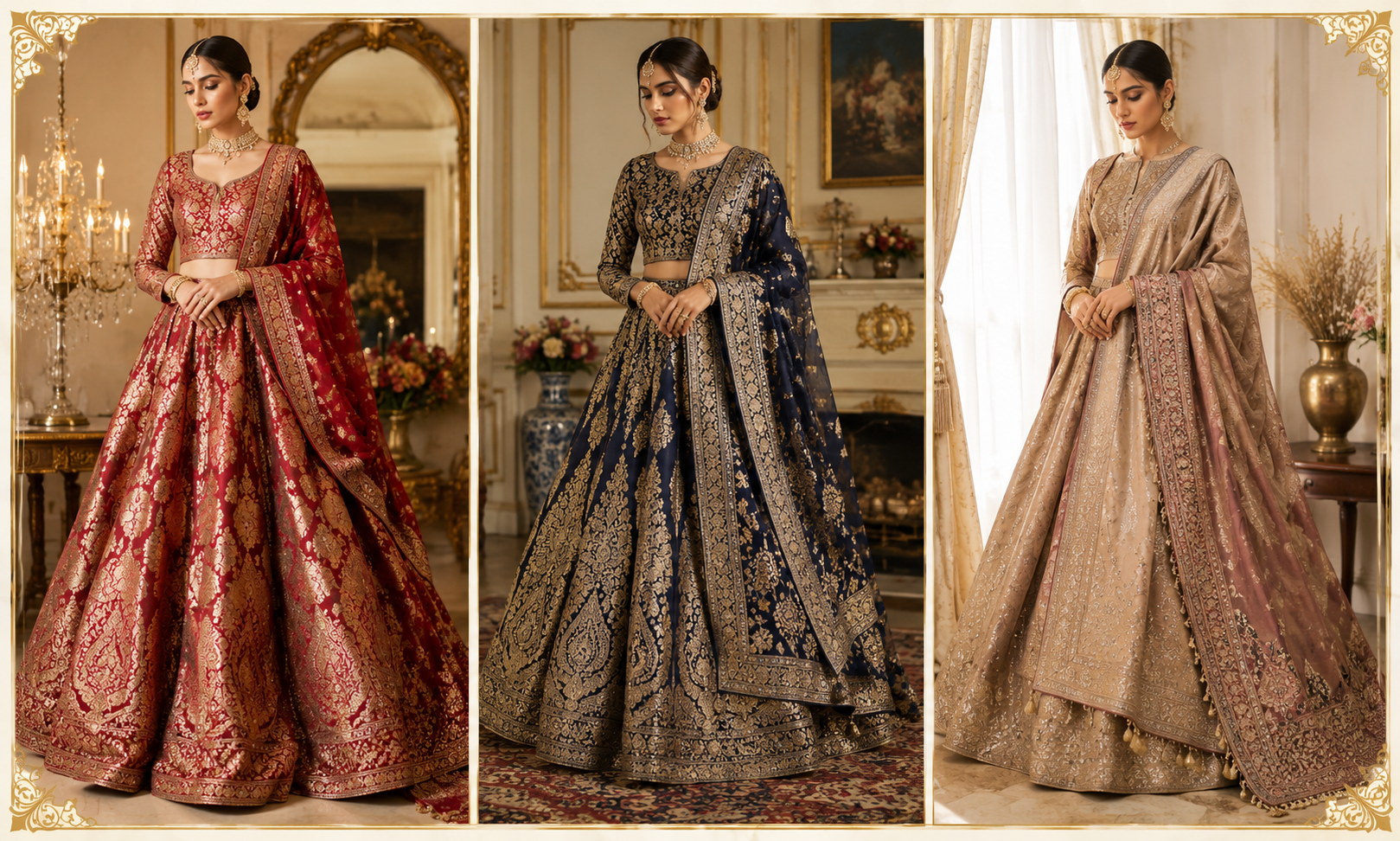
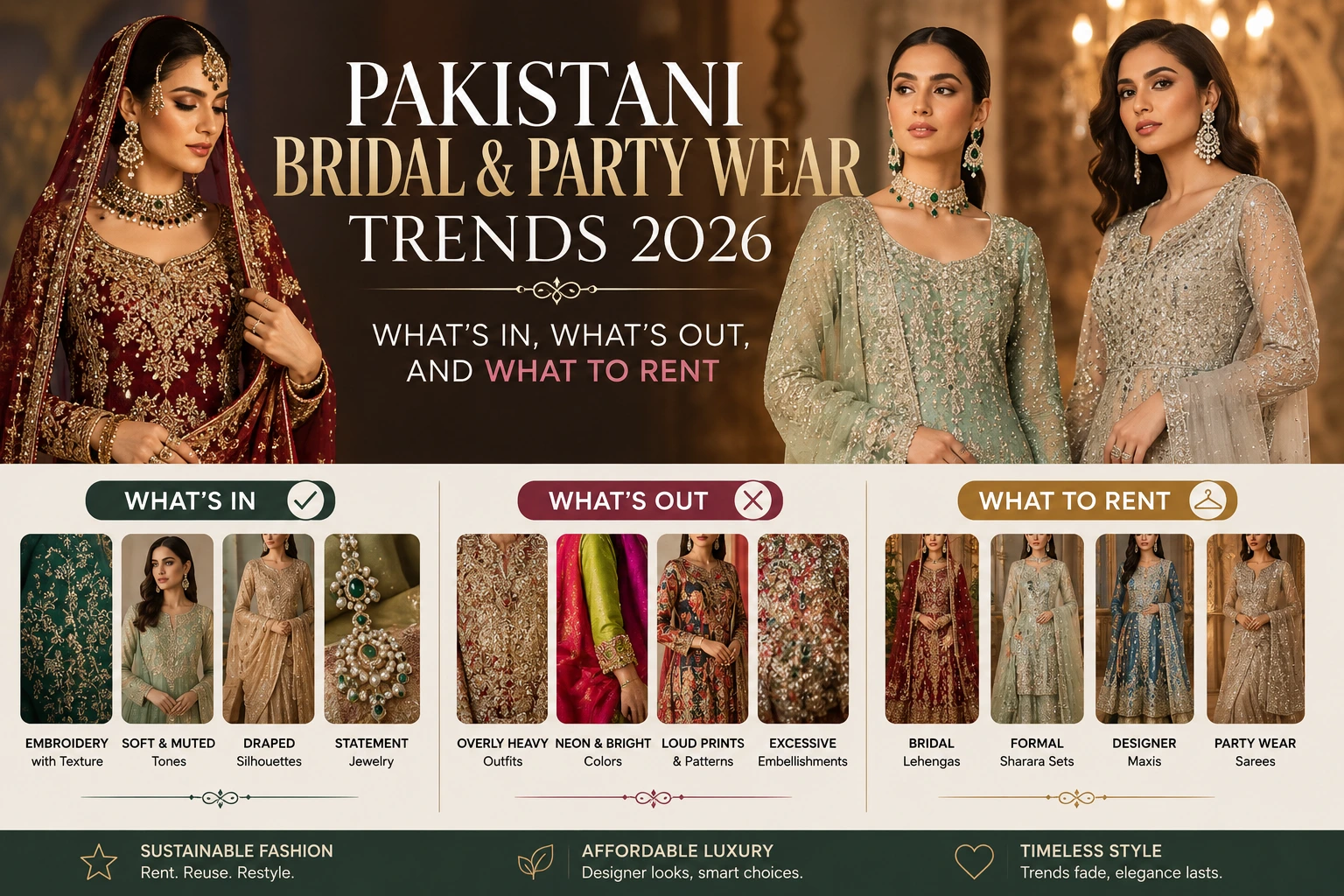
The Business Case for Rent-and-Sale: Advantages for Fashion Sellers
RENTNSHINE JOURNAL
For Fashion Sellers & Boutiques
By Blogger • 29 July 2026 • 8 Min Read
Somewhere in your storeroom is an outfit that cost you real money and hasn’t earned you a single rupee in months.
— the problem almost every fashion seller quietly deals with
If you run a fashion label, boutique, or even just sell out of your own wardrobe, you already know the frustrating part isn’t making beautiful clothes. It’s what happens after someone buys one outfit and never comes back for six months, while the rest of your stock just sits there depreciating on a hanger. A rent-and-sale model doesn’t fix that by working harder. It fixes it by giving the same outfit more than one way to earn for you. Here’s what that actually looks like, and why more sellers in Pakistan’s fashion space are moving toward it.
01
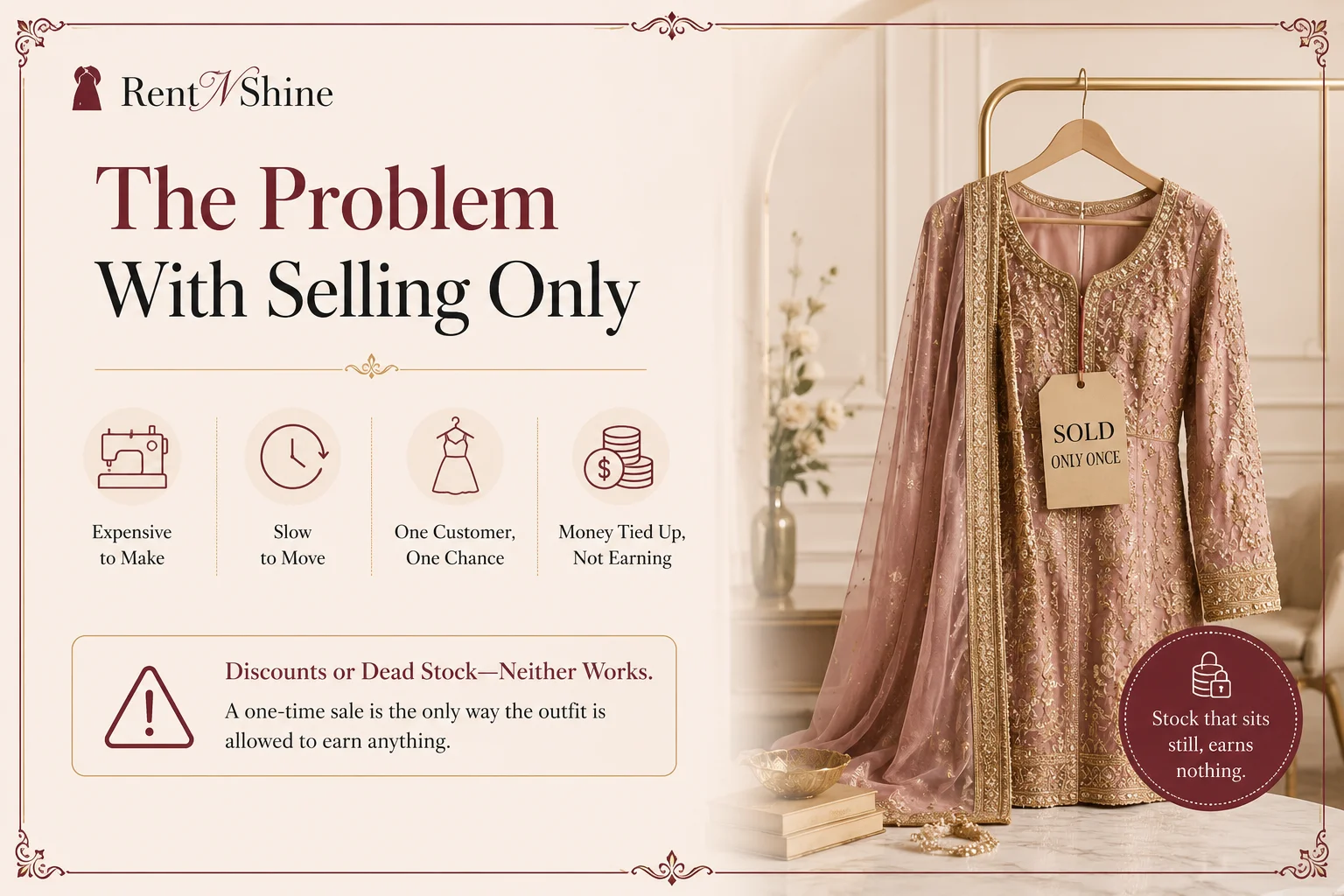
The Problem With Selling Only
Here’s the part nobody puts in the pitch deck. Occasion wear is expensive to make and slow to move. A bridal or party outfit can take weeks of work and a serious amount of material, and then it needs exactly one customer who happens to want that size, that color, and that price, at that moment. Miss that window and the outfit just sits there, tying up money that could be doing something else.
Most sellers deal with this the same way: discount aggressively once a season passes, or hold onto stock and hope next year’s customer has similar taste. Neither actually solves the underlying issue, which is that a one-time sale is the only way the outfit is allowed to earn anything.
02
What a Rent-and-Sale Model Actually Means
The idea is simple enough. Instead of listing an outfit for sale only, you list it for both rent and sale at the same time. A customer who wants to own the piece can still buy it. A customer who just needs it for one event, and doesn’t want to spend that much on something they’ll wear once, can rent it instead. Same outfit, same listing, two different kinds of buyers.
For a seller, this isn’t a totally different business. It’s the same stock working harder. An outfit that might have sold once now has a chance to be rented several times before it ever sells, or it might sell straight away to someone who was never going to rent in the first place. Either way, you’ve widened who your outfit can actually reach.
03
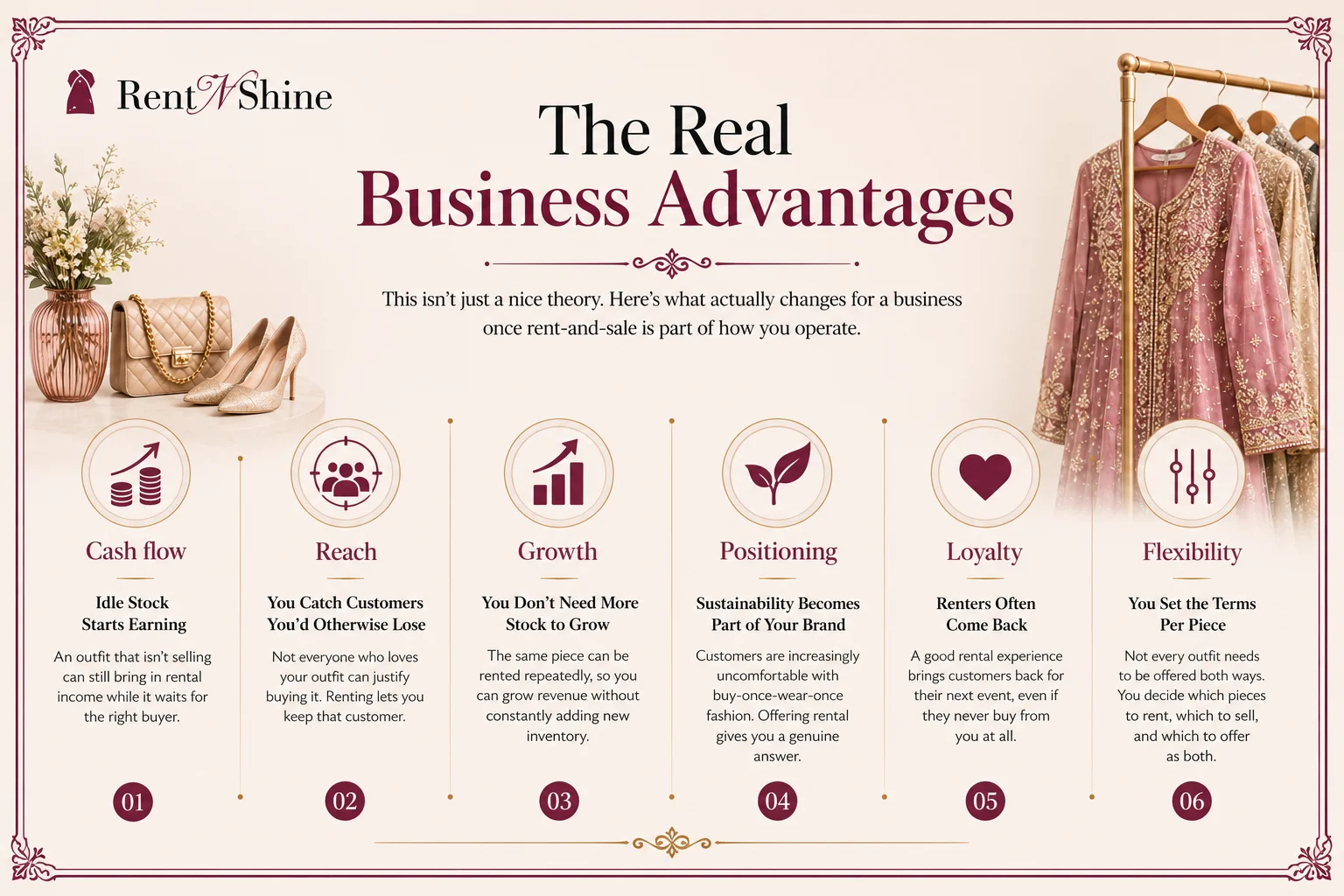
The Real Business Advantages
This isn’t just a nice theory. Here’s what actually changes for a business once rent-and-sale is part of how you operate.
Cash flow
Idle Stock Starts Earning
An outfit that isn’t selling can still bring in rental income while it waits for the right buyer, instead of sitting there as dead weight on your books.
Reach
You Catch Customers You’d Otherwise Lose
Not everyone who loves your outfit can justify buying it. Renting lets you keep that customer instead of losing them to a cheaper, lower quality alternative.
Growth
You Don’t Need More Stock to Grow
Because the same piece can be rented repeatedly, you can grow revenue without constantly producing or buying new inventory just to keep up.
Positioning
Sustainability Becomes Part of Your Brand
Customers are increasingly uncomfortable with buy-once-wear-once fashion. Offering rental gives you a genuine answer to that, not just a marketing line.
Loyalty
Renters Often Come Back
A good rental experience brings customers back for their next event, even if they never buy from you at all. That repeat relationship is worth more than a single sale.
Flexibility
You Set the Terms Per Piece
Not every outfit needs to be offered both ways. You decide which pieces make sense to rent, which to sell only, and which to offer as both.
04
Selling Only vs Rent-and-Sale
It helps to see the difference side by side, because the shift is smaller than it sounds but the effect on revenue is not.
Selling only
The outfit earns once. If it doesn’t sell quickly, it sits unsold, loses relevance as trends move on, and eventually gets marked down just to clear space.
Rent-and-sale
The outfit can earn repeatedly through rentals while still being available to sell whenever the right buyer shows up. Nothing about selling it later is lost.
05
Why Trust Decides Everything
i.
Renters Need to Trust the Fit and Condition
Since a renter can’t try the outfit on beforehand, accurate measurements, honest photos, and clear condition notes matter far more than they would in a normal sale.
ii.
Owners Need to Trust What Comes Back
If you’re the one lending the outfit, you need confidence that it’ll be returned on time and in the same condition it left in. Clear terms upfront prevent most disputes before they start.
iii.
Both Sides Need a Way to Resolve Problems
Something will eventually go wrong, a late return, a stain, a mismatched expectation. Having an actual process to handle it is what keeps people coming back instead of leaving a bad review and never returning.
06
Getting It Right From Day One
Do this
Start with your slower-moving pieces
Test rent-and-sale on outfits that haven’t been selling well rather than your newest arrivals, so you learn the process on stock that was earning nothing anyway.
Avoid this
Treating rental terms as an afterthought
Vague policies on damage, late returns, or cancellations cause more disputes than almost anything else. Write them clearly before your first rental goes out.
07
Reading the Wedding Season Calendar
Demand for occasion wear in Pakistan follows the wedding calendar closely, and planning your rent-and-sale mix around it makes a real difference to how well it performs.
Jan – MarHigh
Apr – JunModerate
Jul – AugLow
Sep – DecPeak
Stock up your rental listings ahead of September and January, since that’s when browsing activity picks up well before bookings actually come in.
08
Frequently Asked Questions
Is a rent-and-sale model actually profitable for a small fashion business?
It can be, because you’re no longer relying on a single sale to justify the cost of an outfit. Even a piece that never sells can still generate income through repeated rentals, which changes how much risk sits on any one item.
Do I need to choose between renting and selling my stock?
No. Most sellers list the same outfit for both, letting the customer decide which one suits them. You can also restrict certain pieces to sale only if you’d rather not rent them out.
How do I protect my inventory when renting it out?
Clear rental terms, condition documentation before and after each rental, and a defined process for handling damage or late returns are the basics. A platform with built-in dispute handling removes a lot of this burden from you directly.
Will renting my outfits hurt their resale value later?
It can reduce it somewhat, the same way any use does, but the rental income earned along the way usually outweighs the difference in eventual resale price, especially for pieces that weren’t selling quickly anyway.
What kind of outfits work best for rent-and-sale?
Statement pieces, bridal wear, and formal occasion outfits tend to work particularly well, since these are exactly the kinds of clothes customers are least willing to buy outright for a single event.
Your stock doesn’t have to choose between earning once or earning nothing. Give it a way to do both, and let it work for you long after the first sale would have ended.
Designer Bridal Wear Resale in Pakistan: Is It Worth It in 2026? | RentNShine
RentNShine Journal — Bridal Wardrobe Economics
“I sold my bridal dress for less than a third of what I paid for it, and I still felt lucky someone wanted it at all.”
— a bride, six months after her wedding
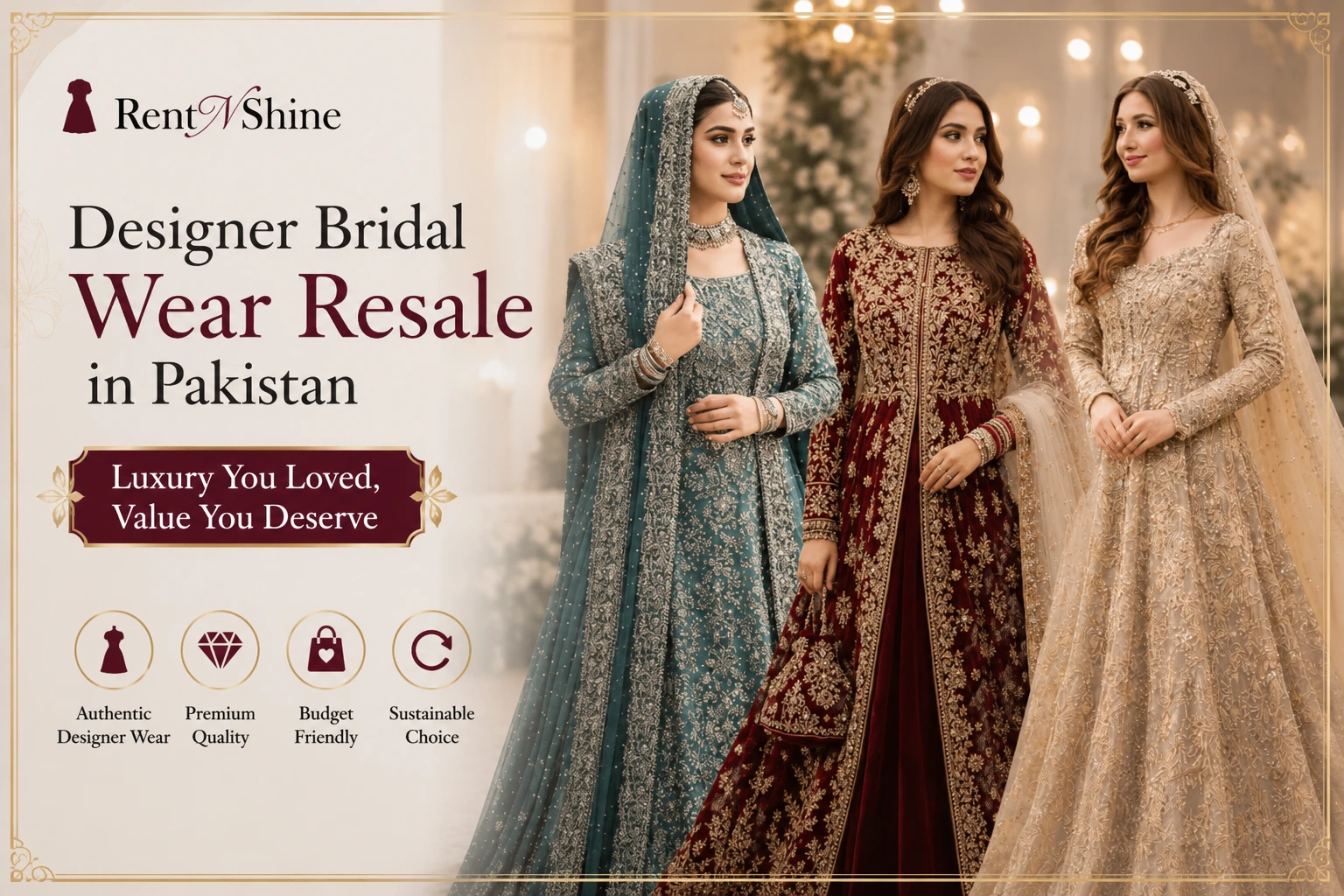
Designer dress resale in Pakistan has grown quickly over the past few years, mostly through Facebook and Instagram groups where brides list their bridal, party, and formal wear once the wedding season is over. If you are wondering whether reselling your dress is actually worth it in 2026, the honest answer depends on the outfit, the designer, and how much of the original price you are hoping to recover. This guide walks through how resale actually works in Pakistan right now, what dresses tend to sell for, and where renting might make more financial sense than selling.
01Why Bridal Wear Resale Is Growing in Pakistan
A single designer bridal outfit in Pakistan can cost anywhere from a hundred thousand rupees to well over a million, yet it is usually worn once. As more brides start to notice this gap between cost and actual use, resale has become the natural next step, a way to recover at least part of what was spent. Preloved bridal groups on Facebook and Instagram now list hundreds of outfits every wedding season, and demand from guests, sisters of brides, and second-time buyers has kept the market active. This ties closely into a wider shift we covered in Luxury Dresses Worn Once: A Growing Problem in Pakistan, where the core issue is the same: too much money spent on something worn for a single day.
02How Resale Actually Works Right Now
There is no single formal marketplace for bridal resale in Pakistan yet. Most of it happens informally, through social groups and personal networks, which affects both the price you can expect and how long a sale takes.
Facebook and Instagram Groups
The most common route, with wide reach but heavy competition.
Groups like preloved bridal and formal wear pages reach thousands of members, but your listing sits among many others, so pricing and photos matter a great deal.
Dedicated Resale Pages
Smaller reach, but a more targeted buyer base.
Pages built specifically around designer resale tend to attract buyers who already know the value of the brand, which can help with pricing but usually takes longer to find the right match.
Word of Mouth
Slower, but often the most trusted route.
Selling within family or friend circles avoids listing fees and negotiation with strangers, though it limits how many potential buyers actually see the outfit.
03Is Resale Actually Worth It? The Real Numbers
The honest number most sellers do not expect going in is how much value a bridal outfit loses after just one wear. Even well-known designer pieces rarely resell close to their original price.
There is no fixed market rate for resale in Pakistan, so pricing often comes down to guesswork, comparing your outfit to similar listings, and hoping a buyer agrees with your number.
Finding the Right Buyer
A very specific size, color, or style can sit in a resale group for months before the right buyer comes along, especially outside peak wedding season.
Condition and Alterations
Any permanent alteration made for your own fit can shrink your buyer pool later, since the outfit may no longer suit a wide range of body types.
05Resale vs Renting: Which Makes More Sense
Selling recovers a portion of the original cost once. Renting the same outfit out, or choosing to rent instead of buy in the first place, can work differently depending on which side of the transaction you are on.
If You Already Own the Dress
Listing it for rent on a platform like RentNShine can earn income across multiple bookings, often adding up to more than a single resale would bring in.
If You Have Not Bought One Yet
Renting instead of buying avoids the resale problem entirely, since there is no outfit left to sell or store once the event is over.
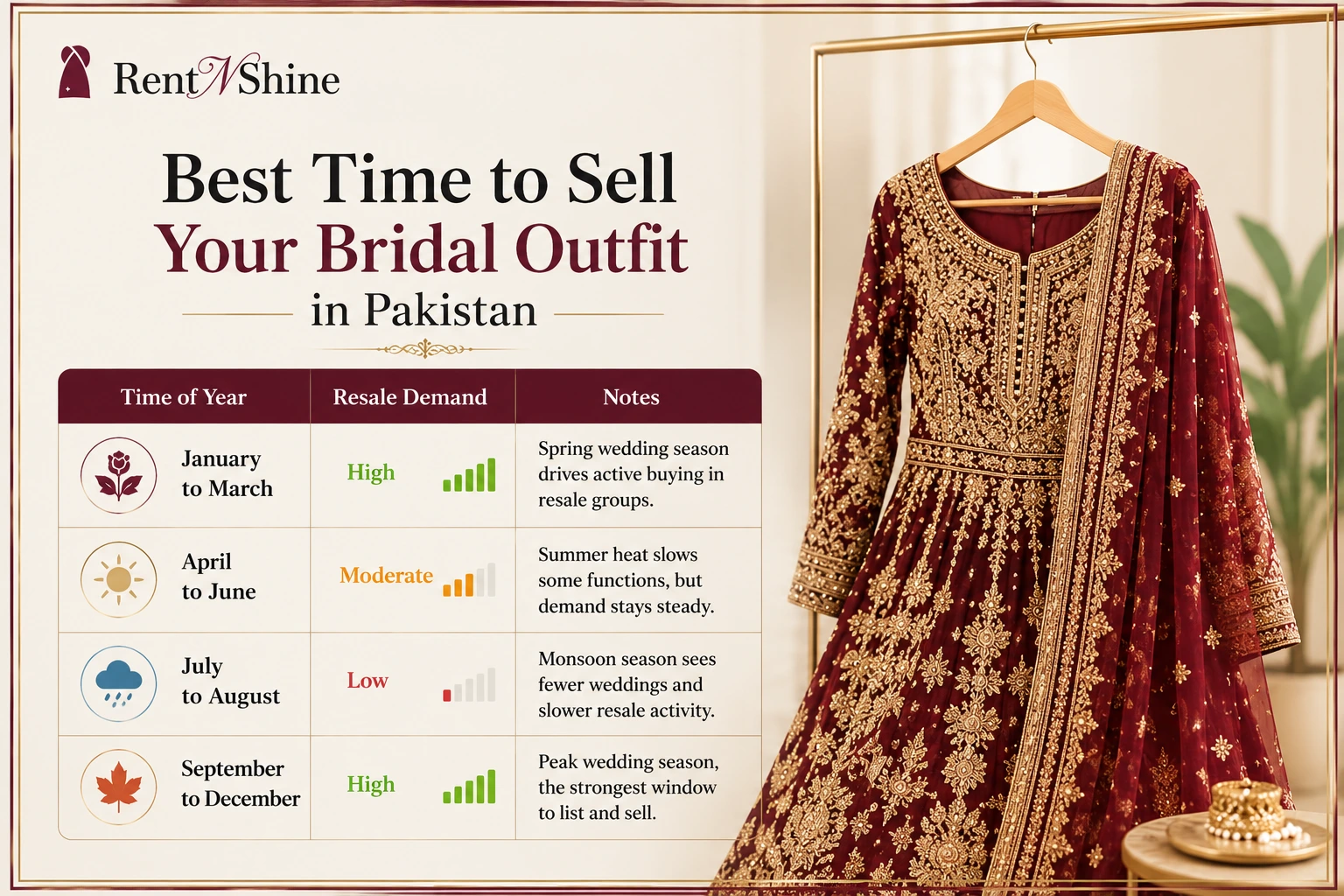
06Best Time to Sell Your Bridal Outfit in Pakistan
Timing has a real effect on how quickly a dress sells and what it sells for. Demand in resale groups tends to follow the wedding calendar itself.
Time of Year
Resale Demand
Notes
January to March
High
Spring wedding season drives active buying in resale groups
April to June
Moderate
Summer heat slows some functions, but demand stays steady
July to August
Low
Monsoon season sees fewer weddings and slower resale activity
September to December
High
Peak wedding season, the strongest window to list and sell
07How to Get the Best Resale Value
Do This
List during peak wedding months
Timing your listing for September through December or January through March puts your outfit in front of the most active buyers.
Avoid This
Underpricing out of impatience
Dropping the price too quickly after a slow first week often means leaving money on the table that a bit more patience would have recovered.
08Frequently Asked Questions
Resale value for a designer bridal dress in Pakistan typically ranges from 30 to 50 percent of the original price, depending on the designer, the outfit’s condition, and how recent the style is. Heavily worked or embellished pieces tend to hold value better than simpler cuts.
Most designer dress resale in Pakistan happens through Facebook and Instagram preloved groups, dedicated resale pages, and word of mouth within family and social circles. A small number of platforms also offer consignment-style resale for bridal and formal wear.
Renting out a bridal dress usually earns more over time than a single resale, since the same outfit can be rented to multiple people across several events instead of being sold once for a fraction of its original price.
It can take anywhere from a few weeks to several months to resell a bridal dress in Pakistan, depending on the design, the season, and how actively it is marketed within resale groups or platforms.
Yes, significant alterations, especially permanent ones like taking in a bodice or shortening a hem, can reduce resale value since the outfit may no longer fit a wider range of buyers.
“There’s no such thing as one ‘formal’ look in Pakistan — there’s the formal that fits the room, and the formal that fights it.”
— common wisdom among Lahore’s event stylists
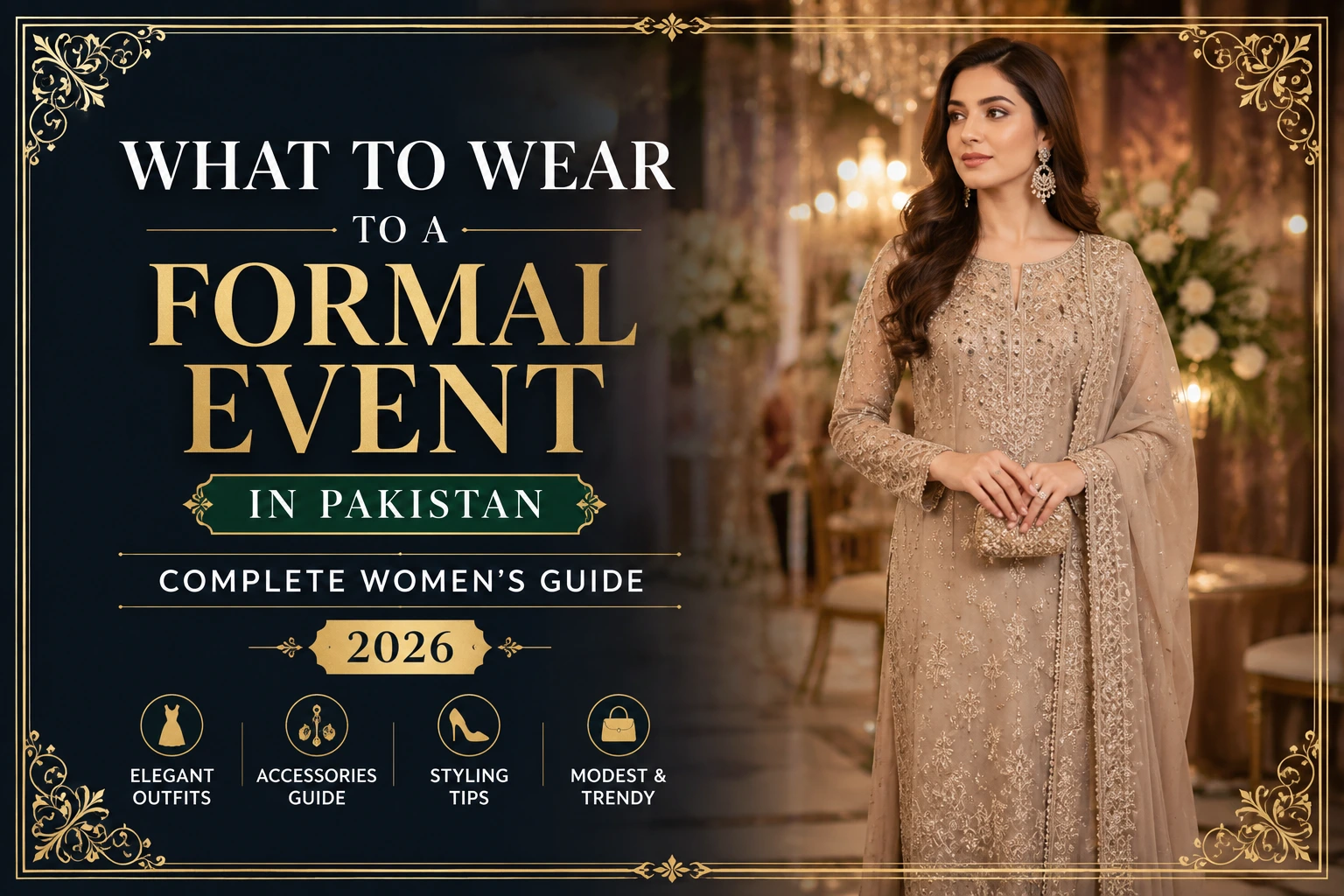
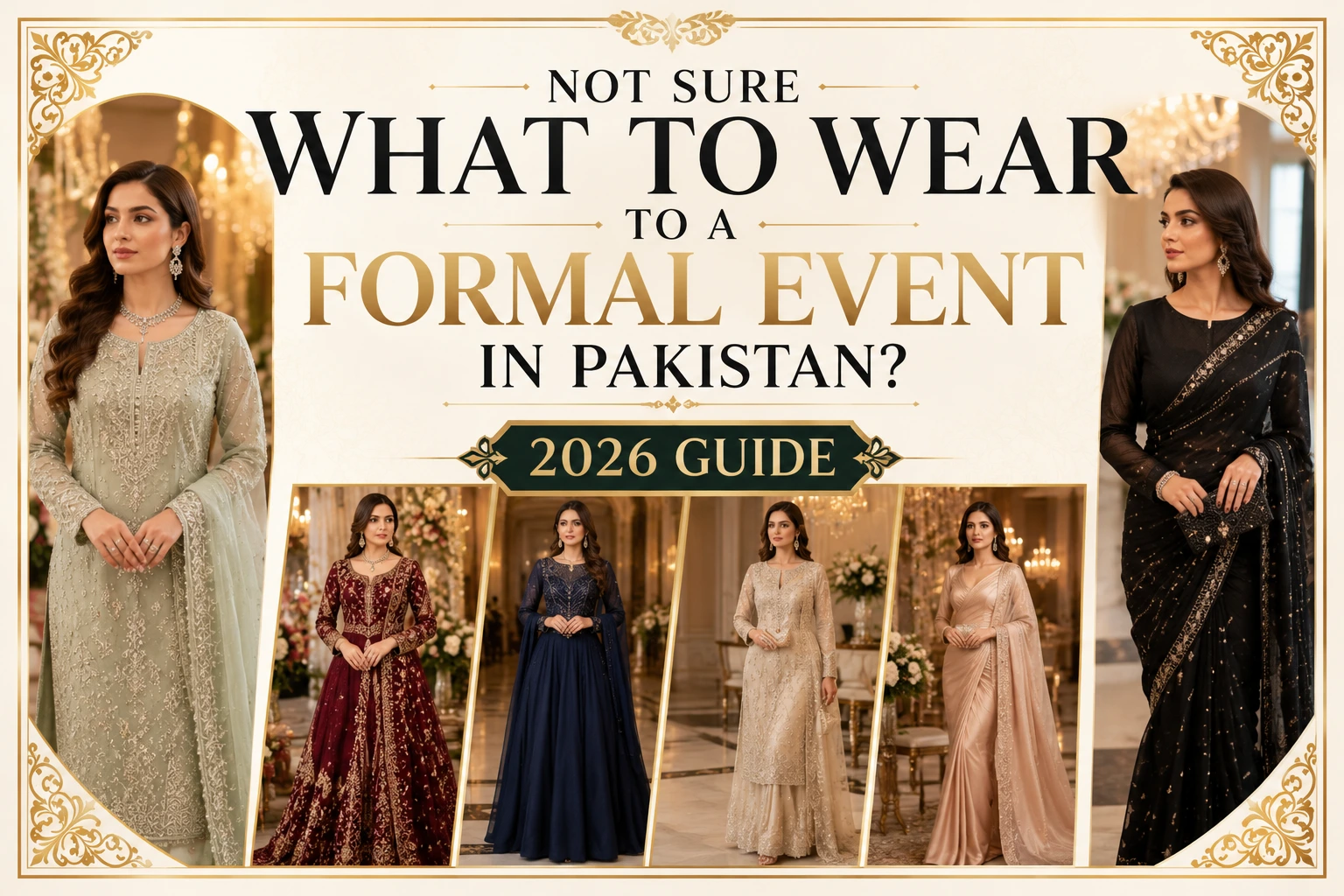
If you’ve ever stood in front of your closet re-reading an invitation that just says “formal attire,” you already know the problem. Figuring out what to wear to a formal event in Pakistan isn’t really about owning enough clothes — it’s about knowing which of your options actually matches the specific occasion, city, venue, and guest list you’re walking into. A “formal” wedding reception, a “formal” embassy dinner, and a “formal” corporate gala can call for three completely different outfits, even though the invite uses the exact same word.
This guide breaks that down properly: what “formal” actually means across Pakistan’s most common event types, which outfit categories cover each one, how fabric and color choices shift with the season, and the small styling details that separate a look that photographs well from one that just looks correct on paper. By the end, you’ll have a clear answer for any invite that lands in your inbox this year.
01What Does “Formal” Actually Mean in Pakistan?
Unlike Western dress codes, which are fairly standardized (black tie, cocktail, business formal), Pakistani formal dressing blends two wardrobes at once — Eastern and Western — and the word “formal” can point to either, depending entirely on context. A corporate award night and a walima both technically call for “formal wear,” but one expects a tailored gown or pantsuit while the other expects a heavily finished Eastern set. The single most useful skill in dressing for any Pakistani event is learning to read past the word on the invitation and toward the actual event type underneath it.
Formal vs. Semi-Formal vs. Smart Casual
Formal dressing calls for structured, well-finished pieces — think tailored Anarkalis, gowns, or heavily worked sarees. Semi-formal sits a notch below: clean kurta sets, simpler sarees, or cocktail dresses with lighter embellishment. Smart casual is the most relaxed of the three, allowing co-ord sets or lightly embroidered lawn suits. Most confusion happens when people treat these three as interchangeable, when in practice each one signals a different level of effort the host is expecting.
Daytime Formal vs. Evening Formal
Daytime formal events — engagement brunches, daytime corporate functions — lean toward lighter fabrics and softer, pastel tones. Evening formal events call for richer fabrics like silk, velvet, or organza, in deeper jewel tones, with more room for embellishment and shine. Getting this distinction wrong is one of the most common formal-wear mistakes: a daytime pastel look can feel underwhelming at a candle-lit evening gala, while a heavily sequinned evening piece can feel overdressed under daylight.
02Formal Outfit Categories Every Woman Should Know
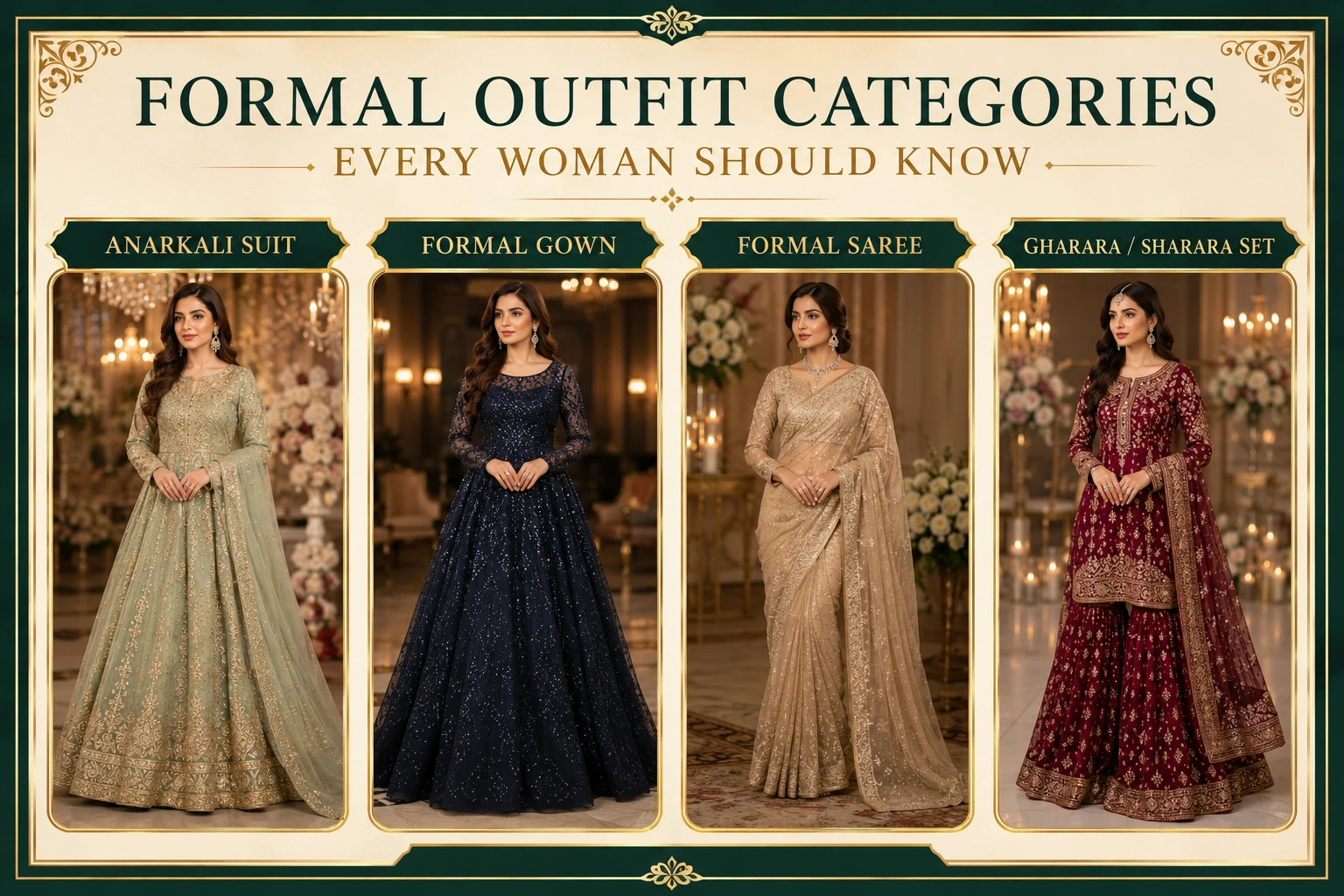
Once you understand the type of formality an event calls for, the next step is matching it to the right outfit category. Pakistan’s formal wardrobe options generally fall into four broad categories, each suited to a different register of event.
Anarkali Suit
A flowing, floor-grazing silhouette that reads as elegant without feeling overly traditional — one of the most versatile formal picks for weddings, corporate dinners, and festive gatherings alike.
Formal Gown
A Western silhouette best suited to black-tie galas, diplomatic functions, and corporate award nights where a more international formal register is expected.
Formal Saree
The most traditionally elegant option, ideal for wedding functions and family events where Eastern formality is preferred or expected.
Gharara / Sharara Set
A structured, festive silhouette rooted in Mughal-era tailoring — a strong choice for weddings, mehndis, and heavily celebratory functions.
Tap through the most common formal occasions below to see exactly what to reach for.
Wedding / Walima
The most formal, most celebratory register in Pakistani dressing.
A heavily finished Anarkali, gharara, or formal saree with rich embroidery is the safest and most appropriate choice. Deeper jewel tones and gold detailing work especially well for evening walima functions.
Polished and professional, with room for glamour at the black-tie end.
A tailored pantsuit, structured Anarkali, or floor-length gown depending on the exact formality level. For a full dress-code breakdown, see our corporate dress code guide.
Understated elegance over spectacle — modest, solid-toned, and well-tailored.
A floor-length gown or a modestly finished formal Eastern outfit in a rich, solid tone. Our embassy dress guide for Islamabad covers this in full detail.
Festive, colorful, and celebratory, with slightly more room for embellishment.
A festive Anarkali or lightly embellished formal set in soft pastels or celebratory jewel tones works beautifully for Eid gatherings and family functions.
Pakistan’s climate plays a bigger role in formal dressing than most people account for. A heavily embellished velvet gharara might look stunning in photographs, but it becomes genuinely uncomfortable at a summer daytime function in Karachi or Lahore. Matching fabric weight to the season is just as important as matching the outfit to the occasion.
Season
Recommended Fabrics
Colors to Favor
Summer
Chiffon, organza, lightweight silk, cotton-net
Soft pastels, whites, light corals
Winter
Velvet, raw silk, heavier jamawar
Deep jewel tones, maroon, emerald, navy
Monsoon / Humid Evenings
Crepe, light georgette
Muted tones that resist visible creasing
2026 Color Trends Worth Knowing
This year’s formal palette leans toward calm, rich tones rather than loud, high-contrast combinations. Soft pastels are trending for daytime formal events, while deep jewel shades — emerald, maroon, and navy — dominate evening formal wear. For a closer look at where the broader silhouette and embellishment trends are heading, read our guide on 2026 formal wear trends in Pakistan.
05Accessories & Finishing Touches
The outfit does most of the work, but a few finishing choices determine whether a formal look feels complete or unfinished. Keep jewelry proportionate to the outfit’s embellishment level — a heavily worked Anarkali needs only minimal jewelry, while a simpler formal saree can carry a statement necklace or earrings well. Footwear should match the formality register too: delicate heels for Eastern formal wear, structured heels or flats for Western gowns depending on the venue’s terrain. A well-chosen clutch or potli rounds out the look without competing with the outfit itself.
06Common Mistakes to Avoid
Mistake
Matching the word, not the event
Treating every invite that says “formal” the same way, instead of reading the actual event type underneath it.
Mistake
Ignoring the season
Choosing a heavy velvet or jamawar piece for a summer daytime event, or a light chiffon for a chilly evening function.
07Frequently Asked Questions
Formal wear for women in Pakistan typically includes Anarkali suits, formal gowns, sarees, and gharara or sharara sets made from richer fabrics like silk, organza, or chiffon, often finished with embroidery or embellishment. The exact level of formality depends on the event, ranging from smart formal office wear to heavily embellished wedding and gala outfits.
When a dress code isn’t specified, a well-tailored Anarkali suit or a knee-to-midi length dress in a solid, rich tone is a safe default. It reads as appropriately formal without being over- or under-dressed for most Pakistani events.
Yes, Western formal dresses and gowns are widely accepted at corporate events, diplomatic functions, galas, and increasingly at wedding-adjacent parties in major Pakistani cities. For strictly traditional family functions, Eastern formal wear is still generally preferred.
2026 formal wear trends favor soft pastels for daytime events and rich jewel tones like emerald, maroon, and navy for evening formal occasions, paired with cleaner silhouettes and more minimal embroidery than previous years.
Renting is generally far more cost-effective for one-time or infrequent formal events, since it avoids the full retail cost of a piece that may only be worn once, while still allowing access to well-finished, current-season outfits. See our price breakdown by city for specifics.
Gharara vs Sharara: Which Bridal Style Should You Rent? | RentNShineRentNShineRent the Dress. Own the Moment.
Two of the most requested bridal silhouettes in Pakistan are also two of the most confused. Gharara and sharara look similar at a glance, both flared, both dramatic, both rooted in the same traditional family of bridal wear, yet they are genuinely different garments with different histories, different fits, and different occasions where each one shines.
What Is a Gharara?
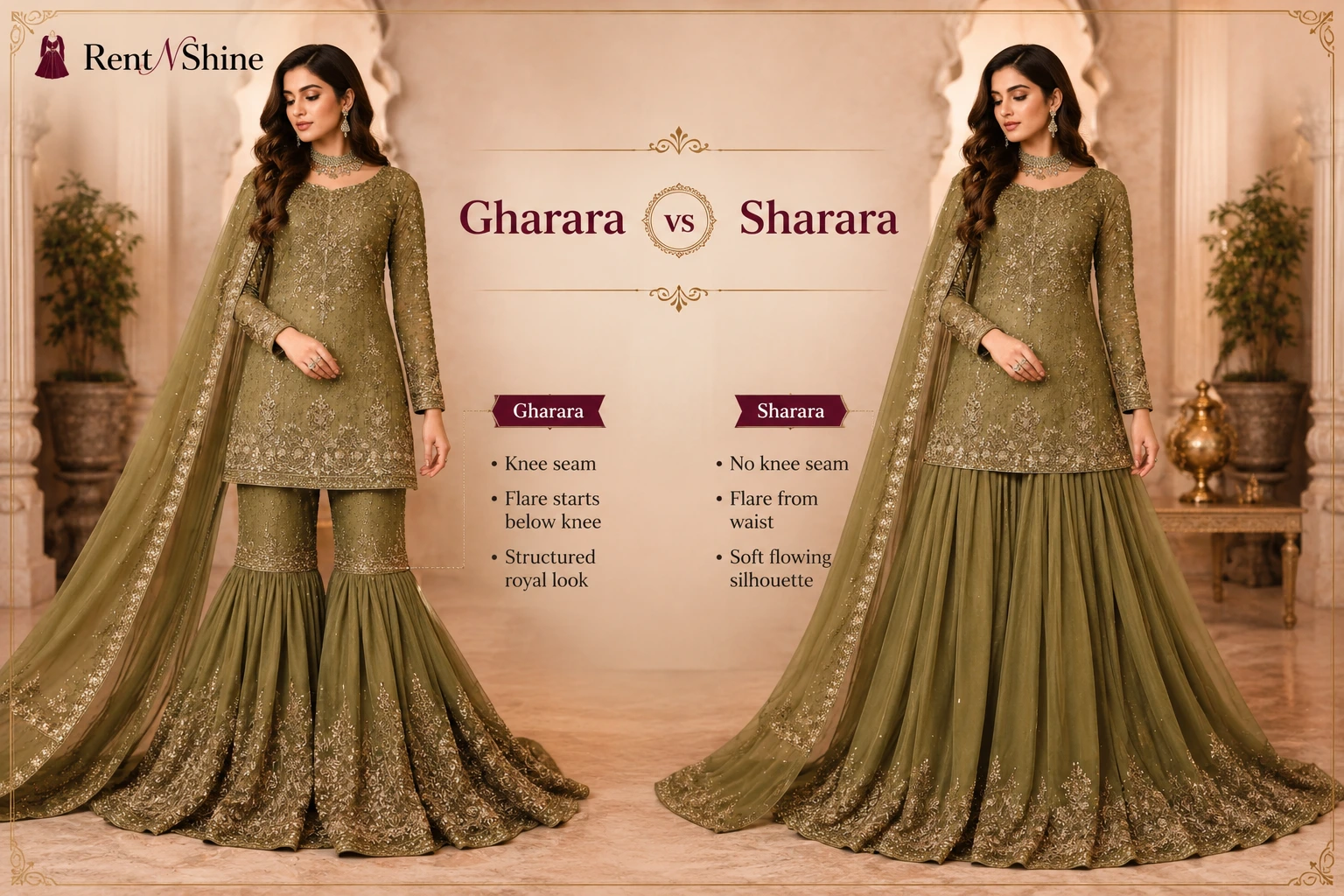
A gharara is a two-piece bottom garment made up of wide, distinctly separated trouser legs that flare out dramatically below the knee, almost resembling two small skirts joined at the waist. It originated in Lucknow during the Mughal era and has long been associated with Nawabi and royal wedding traditions in the subcontinent.
What makes a gharara instantly recognisable is the seam at the knee where the narrow upper portion meets the wide, often heavily embroidered lower flare. This structural seam is the single biggest giveaway when distinguishing a gharara from a sharara, and it is also what gives the gharara its distinctive bell-like movement when the wearer walks.
Gharara sets are traditionally paired with a short kurta or angarkha-style top and a dupatta, and the lower flare is usually the most heavily embellished part of the outfit, with zari, gota, and sometimes mirror work concentrated around the hem.
What Is a Sharara?
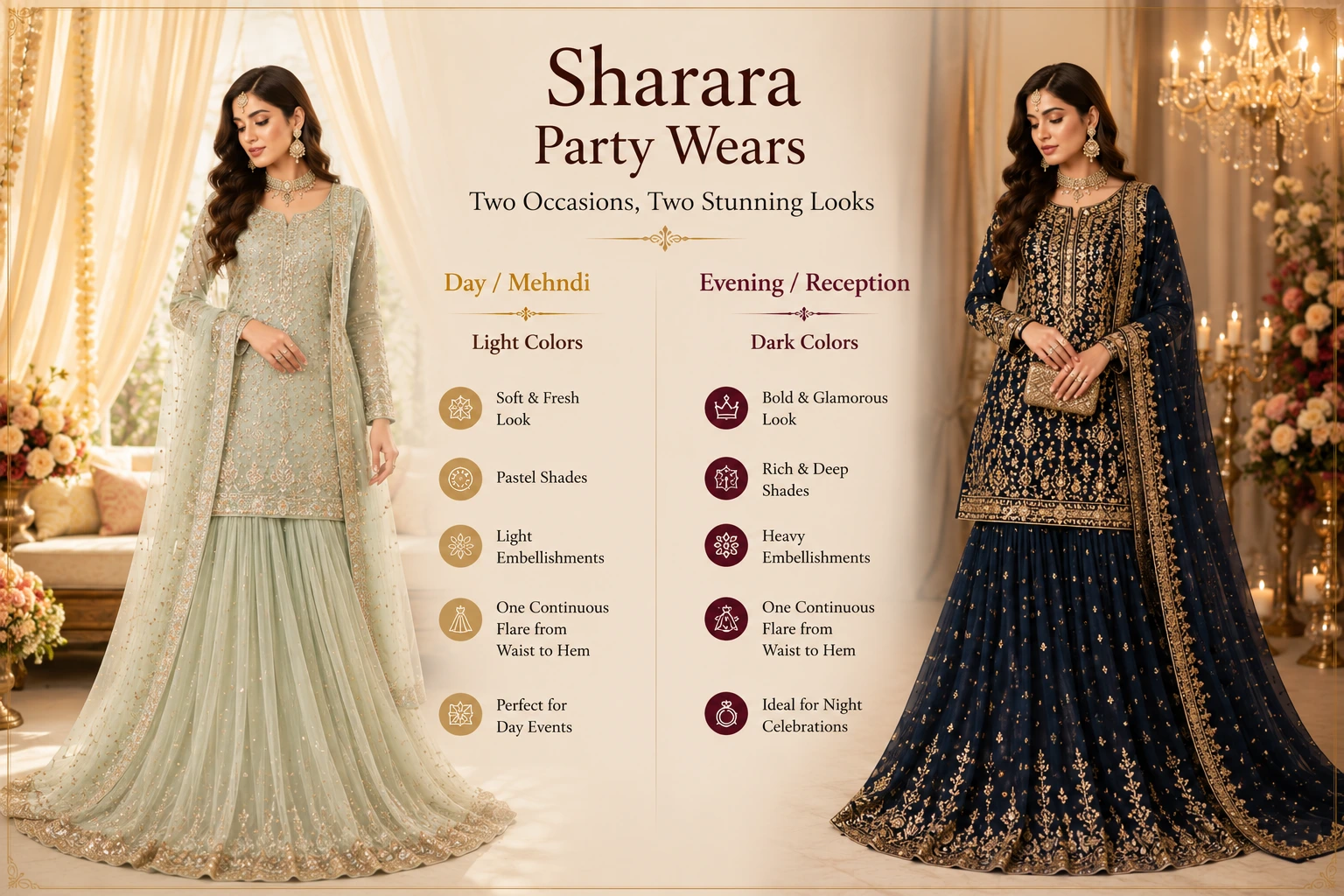
A sharara is also a flared bottom garment, but unlike the gharara, it flares from the waist or hip in one continuous line, without the distinct knee seam. This gives the sharara a smoother, more fluid silhouette that moves like a single piece of fabric rather than two structured halves.
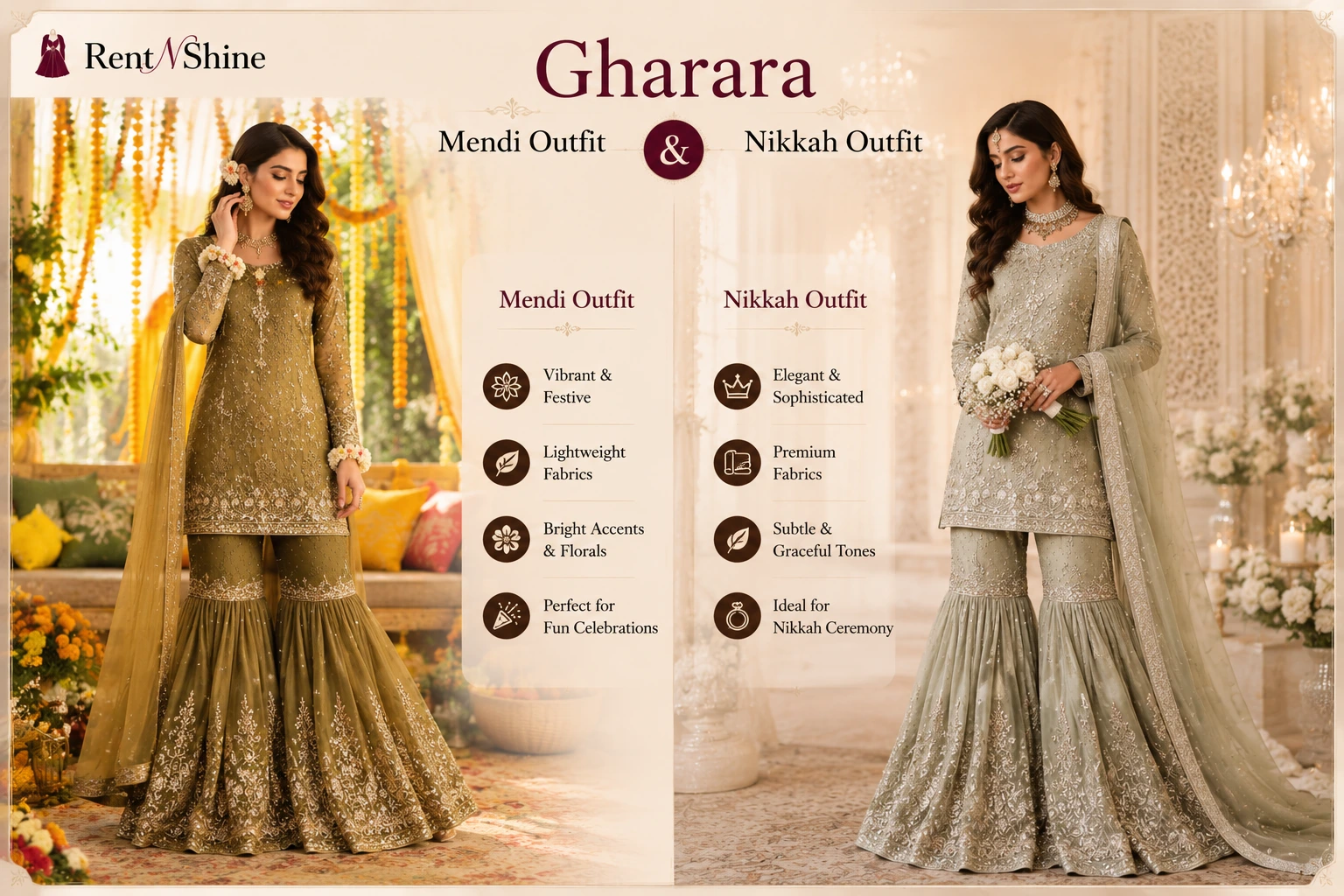
Shararas tend to be lighter and easier to move in, which is part of why they have become especially popular for mehndi and dholki functions where dancing and movement are part of the celebration. The flare is usually achieved through panelled fabric rather than a hard seam, giving it a softer drape overall.
Like the gharara, the sharara is typically worn with a short kurta and dupatta, though contemporary versions often pair it with a more fitted, embellished blouse for a dressier finish suited to baraat or reception functions.
If you remember one thing: the gharara has a seam at the knee that creates two distinct flared sections. The sharara flares as one continuous piece from the waist. Everything else follows from that single structural difference.
Key Differences at a Glance
Here is a side by side comparison covering the details that matter most when deciding which style to rent for your wedding.
Feature
Gharara
Sharara
Silhouette
Two distinct flared sections joined at a knee seam
One continuous flare from waist to hem
Origin
Lucknow, Nawabi and Mughal court tradition
Widely worn across North India and Pakistan, less regionally specific
Movement
Structured, bell-like sway when walking
Softer, more fluid drape, easier for dancing
Best For
Baraat, walima, formal evening functions
Mehndi, dholki, daytime and outdoor functions
Embellishment Style
Heavy embroidery concentrated at the hem and knee seam
Embroidery spread more evenly across panels
Comfort Level
More structured, slightly heavier to wear
Lighter and more comfortable for extended wear
Which Style Should You Choose?
The right choice depends largely on the function you are dressing for and how you want to move through your event.
Choose a Gharara If
You want a formal, structured look for your baraat or walima. You prefer a more traditional, heritage-rooted silhouette. You are comfortable with a slightly heavier garment in exchange for a dramatic, regal presence on stage.
Choose a Sharara If
You are dressing for a mehndi or dholki and want to dance comfortably. You prefer a lighter, more fluid silhouette. You want an outfit that photographs well in movement, especially for outdoor or daytime events.
Many brides on RentNShine choose to rent both: a gharara for the baraat and a sharara for the mehndi, since renting makes it financially realistic to have a different silhouette for each function rather than compromising on one outfit for the entire week. If you are still exploring overall bridal direction, our guide on the 10 most stunning bridal lehengas available to rent right now covers how lehengas compare to both of these silhouettes if you want a third option.
Styling Tips for Both Looks
Pair the Right Top
A gharara looks best with a slightly longer, structured kurta or angarkha that balances its volume. A sharara pairs well with a shorter, more fitted kurta that does not compete with its flowing flare.
Mind the Footwear
Both silhouettes conceal footwear almost completely, so comfort matters more than visibility. Choose flats or low heels you can stand and walk in for hours, especially for a gharara’s heavier movement.
Match Dupatta to Function
A heavier net or organza dupatta complements a gharara’s formal presence. A lighter chiffon or printed dupatta suits a sharara’s relaxed, daytime energy.
Get Measured Properly
Both styles depend on accurate waist and length measurements for the flare to sit correctly. Always check the measurement guide on each RentNShine listing before booking.
Frequently Asked Questions
Is a gharara more expensive to rent than a sharara?
Pricing depends more on fabric and embroidery than silhouette type. However, ghararas often carry slightly higher rental prices due to heavier embellishment and the additional fabric used in their structured cut.
Can I wear a sharara for a baraat?
Yes. While ghararas are traditionally favoured for baraat, a heavily embellished sharara with a dressier blouse works well too, especially for brides who prioritise comfort and ease of movement.
Which silhouette is easier to dance in?
A sharara is generally easier to move and dance in due to its lighter, single-piece flare. A gharara’s structured knee seam can restrict movement slightly more during extended dancing.
Can I rent both a gharara and a sharara for different functions?
Yes, and many brides do exactly this on RentNShine. Renting makes it affordable to have a different silhouette for your mehndi, baraat, and walima without the cost of purchasing multiple outfits.
Do gharara and sharara rentals come with the top and dupatta?
Most listings on RentNShine include a matching kurta and dupatta as part of the set. Check the individual listing for exact inclusions, as this can vary by seller.
Rent Your Gharara or Sharara Today
Browse stunning gharara and sharara sets available for rent right now across Pakistan, in every colour and every size.
RentNShine delivers gharara and sharara sets to every major city in Pakistan. Select your city below to see availability and delivery details. You can also explore the full bridal collection or browse all products if you are still deciding on a style.
Neither gharara nor sharara is the objectively better choice. Each was designed for a different kind of moment, and the best decision comes down to matching the silhouette to the function, your comfort, and the way you want to move through your celebration.
With RentNShine, you do not have to choose just one. Rent a gharara for your baraat, a sharara for your mehndi, and explore the rest of the bridal collection for everything in between.
Ready to find your outfit? Visit rentnshine.com/bridal and browse ghararas, shararas, and lehengas available to rent right now, filtered by your city, size, and function. You can also create a free account to save your measurements for faster checkout next time.
Sherwani for Rent in Pakistan: Everything Grooms Need to Know | RentNShineRentNShineRent the Dress. Own the Moment.
Sherwani for Rent in Pakistan: Everything Grooms Need to Know
A wedding sherwani is one of the most significant purchases a groom will ever make, except it usually does not need to be a purchase at all. As more grooms across Pakistan discover the value of renting, sherwani rental has quietly become one of the smartest decisions a groom can make for his big day.
Why Grooms in Pakistan Are Choosing to Rent
A high-quality sherwani, especially one with heavy embroidery or premium fabric, can cost anywhere from Rs 40,000 to over Rs 1,50,000 at retail. Once the wedding is over, that sherwani is worn rarely, if ever, again. For most grooms, it becomes an expensive piece of fabric sitting in the back of a wardrobe.
Sherwani rental solves this problem directly. On RentNShine, grooms across Pakistan can access designer-quality sherwanis, sourced from boutiques and individual sellers, at a fraction of the purchase price. The same heavy embroidery, the same premium silk and velvet, the same showstopping presence on the baraat stage, without the long-term financial commitment.
There is also a practical advantage that often gets overlooked. Renting allows a groom to choose a different sherwani for each function if he wants to: a heavier piece for the baraat, something lighter and more relaxed for the walima, and a third option entirely for the nikah. Buying that kind of variety would be financially out of reach for most families. Renting makes it effortless. Beyond sherwanis, the full groom collection on RentNShine also covers prince coats, waistcoat suits, and kurta shalwar for every function across the wedding week.
A groom does not need to own his wedding outfit to look unforgettable in it. He just needs the right fit, the right fabric, and the right occasion.
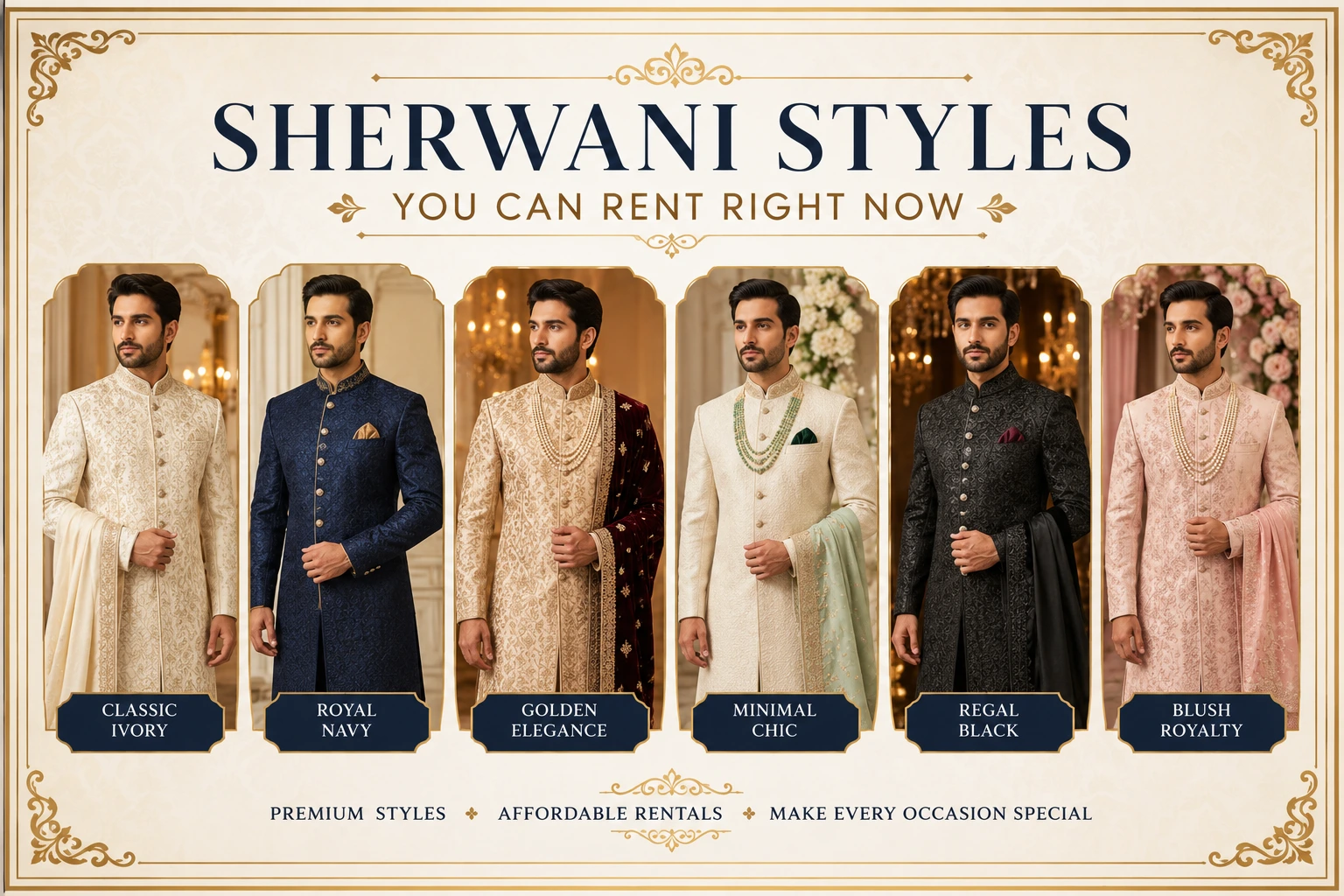
Sherwani Styles You Can Rent Right Now
Sherwani fashion in Pakistan has diversified considerably over the past few years. Here are the five styles currently most in demand on RentNShine, each suited to a different kind of groom and a different kind of function. You can also browse the full product catalogue to see how these styles compare against bridal, party, and formal listings available the same week.
01
Baraat Classic
Classic Embroidered Sherwani
This is the sherwani most grooms picture when they think of their wedding day. Rich fabric, usually in gold, cream, or maroon, layered with detailed zardosi or threadwork across the collar, chest panel, and cuffs. It is formal, traditional, and built to command attention on the baraat stage.
On RentNShine, this style is available with matching trousers and a turban or safa, and remains the single most rented sherwani style across every major city in Pakistan.
02
Understated Elegance
Plain Silk Sherwani
For grooms who prefer a cleaner, less ornate look, a plain silk sherwani in a solid colour offers quiet sophistication. The focus shifts entirely to the cut, the fabric quality, and the fit, rather than embroidery or embellishment.
This style works particularly well for nikah ceremonies, where a more understated presence is often appropriate, and pairs beautifully with a simple stole or shawl for added texture.
03
Winter Wedding
Velvet Sherwani for Winter Weddings
Velvet sherwanis bring warmth and richness that suit Pakistan’s winter wedding season, which runs from roughly October through February. Deep maroon, bottle green, and navy velvet pieces, often finished with antique gold or silver embroidery, photograph beautifully under indoor and evening lighting.
The heavier fabric also gives the sherwani a more substantial, structured silhouette, which many grooms find more flattering than lighter fabrics.
04
Modern Daytime
Pastel and Ivory Sherwani
Following the same shift seen in bridal fashion, pastel and ivory sherwanis have become increasingly popular for daytime functions and walima events. Soft beige, dusty blue, and ivory tones offer a fresh alternative to the deep, heavily embroidered traditional palette.
These pieces pair particularly well when the bride is also wearing a lighter, pastel-toned outfit, creating a coordinated, modern look for wedding photography.
05
Contemporary Cut
Indo-Western Fusion Sherwani
For grooms who want to step slightly outside tradition, fusion sherwanis combine elements of a traditional silhouette with structured, Western-inspired tailoring: sharper lapels, a more fitted waist, and sometimes a layered jacket-style cut over the base sherwani.
This style is gaining popularity among younger grooms in Lahore, Karachi, and Islamabad who want a wedding outfit that still feels personal and current rather than purely ceremonial. If your wedding includes additional formal events, our complete guide to formal dress rental in Pakistan covers suits and event wear that pair well with this style.
Getting the Right Fit: A Groom’s Guide
The single biggest concern grooms have about renting a sherwani is fit. Unlike a bridal lehenga, where flowing fabric allows some flexibility, a sherwani’s structured shoulders and tailored chest mean fit matters enormously to how the outfit looks and feels.
Measure Properly
Take chest, shoulder, sleeve length, and overall height measurements before booking. RentNShine listings include a detailed measurement guide for every sherwani, and our team can help match you to the closest available size.
Book Early
Sherwanis in popular sizes move quickly during peak wedding season. Booking four to six weeks ahead of your event gives you the best chance of securing your preferred style in the right size.
Consider Minor Alterations
Many sellers allow minor adjustments such as sleeve or trouser length. Ask about this when booking if you anticipate needing small changes for a more tailored fit.
Try Before the Big Day
Where possible, arrange to receive your sherwani a day or two before the function so you have time to try it on, walk in it, and request an exchange if anything feels off.
How to Rent a Sherwani on RentNShine
Renting a sherwani is a simple, fully online process from start to finish.
Create an account.Register on RentNShine to save your measurements, track orders, and check out faster on future rentals.
Browse the collection. Visit rentnshine.com/groom/sherwani and filter by city, colour, fabric, and size.
Check availability. Confirm your sherwani is available for your wedding dates before booking.
Submit your measurements. Use the measurement guide on each listing to find your closest fit.
Book and pay securely. Complete checkout through our secure payment gateway.
Receive your sherwani. It arrives cleaned, pressed, and ready to wear ahead of your event.
Return with ease. After the event, send it back through our courier partner. No dry cleaning required on your end.
Frequently Asked Questions
How much does it cost to rent a sherwani in Pakistan?
Rental prices on RentNShine typically range from Rs 8,000 for simpler styles to Rs 25,000 for heavily embroidered, premium sherwanis. This is significantly less than the retail cost of comparable pieces.
Can I rent a sherwani if I live outside a major city?
Yes. RentNShine delivers nationwide, including to smaller cities and towns, through our courier partners. Delivery timelines vary depending on location.
What if the sherwani does not fit well on delivery?
Contact our support team immediately. We will work with you to resolve the issue, including arranging an exchange where one is available in time for your event.
Do rented sherwanis come with matching accessories?
Many listings include matching trousers and a turban or safa. Check the individual listing details, as inclusions vary by seller.
How far in advance should I book?
We recommend booking at least four to six weeks before your event, especially during peak wedding season from October through February and March through May.
Rent the Perfect Sherwani for Your Big Day
Browse premium sherwanis available for rent right now across Pakistan, in every style and every size.
A sherwani is meant to be the outfit a groom feels most himself in, on the one day everyone will remember. It does not need to come with a lifetime of storage and a price tag that lingers long after the wedding is over.
With RentNShine, every groom in Pakistan can access the sherwani he actually wants, in the fabric and style that suits him, without compromise on quality and without the burden of ownership.
Ready to find your sherwani? Visit rentnshine.com/groom/sherwani and browse the full collection available to rent right now, filtered by your city, size, and style.
10 Stunning Bridal Lehengas You Can Rent Right Now in Pakistan | RentNShineRentNShineRent the Dress. Own the Moment.
Bridal Trends 2026
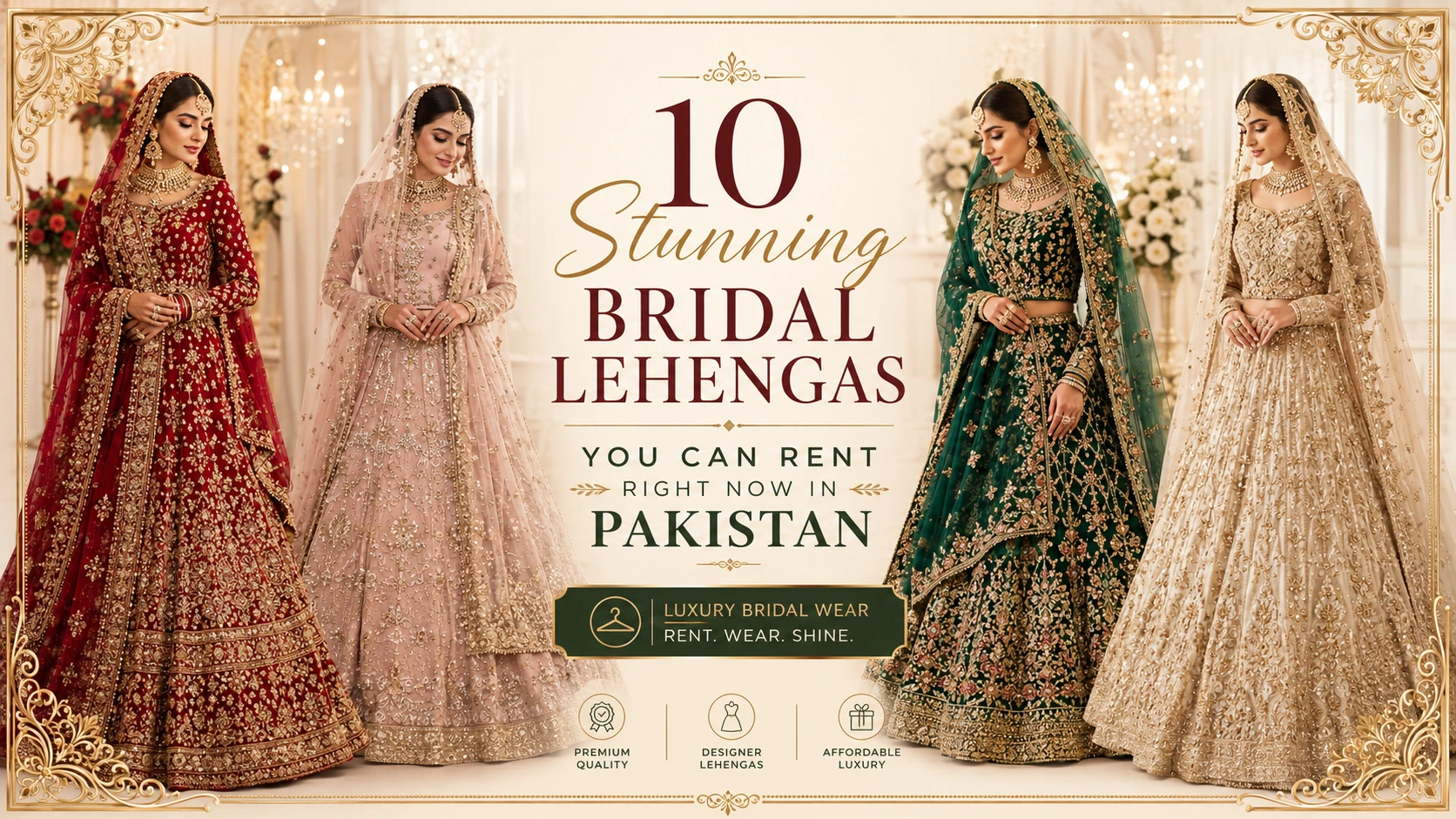
10 Stunning Bridal Lehengas You Can Rent Right Now in Pakistan
Pakistan’s wedding fashion scene in 2026 looks nothing like it did five years ago. The era of buying one heavily embroidered lehenga, wearing it once, and locking it in a cupboard forever is quietly coming to an end. In its place, a smarter, more stylish way of dressing for your wedding has taken over.
Why 2026 Is a Turning Point for Bridal Fashion in Pakistan
Three forces are converging to reshape how Pakistani brides dress for their weddings. The first is the rise of the multi-function wedding. Pakistani weddings have always been elaborate, but the expectations around each individual function have intensified. A mehndi outfit is no longer an afterthought. A walima look demands as much attention as the baraat dress. Brides who were once expected to shine for one evening are now expected to look exceptional across four or five different events.
The second force is a genuine shift in taste. Pakistani brides in 2026 are more internationally exposed, more style-literate, and more willing to challenge convention. The rigid rule that a baraat dress must be red has softened. Royal blue, emerald green, and champagne ivory are all being embraced for main wedding events.
The third is sustainability. Younger brides are increasingly aware that spending Rs 2,00,000 on a garment worn for four hours is not only financially questionable but environmentally irresponsible. Renting is the fashion-forward, conscious choice.
In 2026, renting your bridal lehenga is not a budget compromise. It is a style choice made by women who know exactly what they want.
The 10 Bridal Lehenga Trends You Can Rent Right Now
Each of the following styles reflects a distinct trend dominating Pakistani bridal fashion this season. All are available to rent on RentNShine across multiple cities, with nationwide delivery.
01
Classic Reimagined
The Classic Red, Reimagined
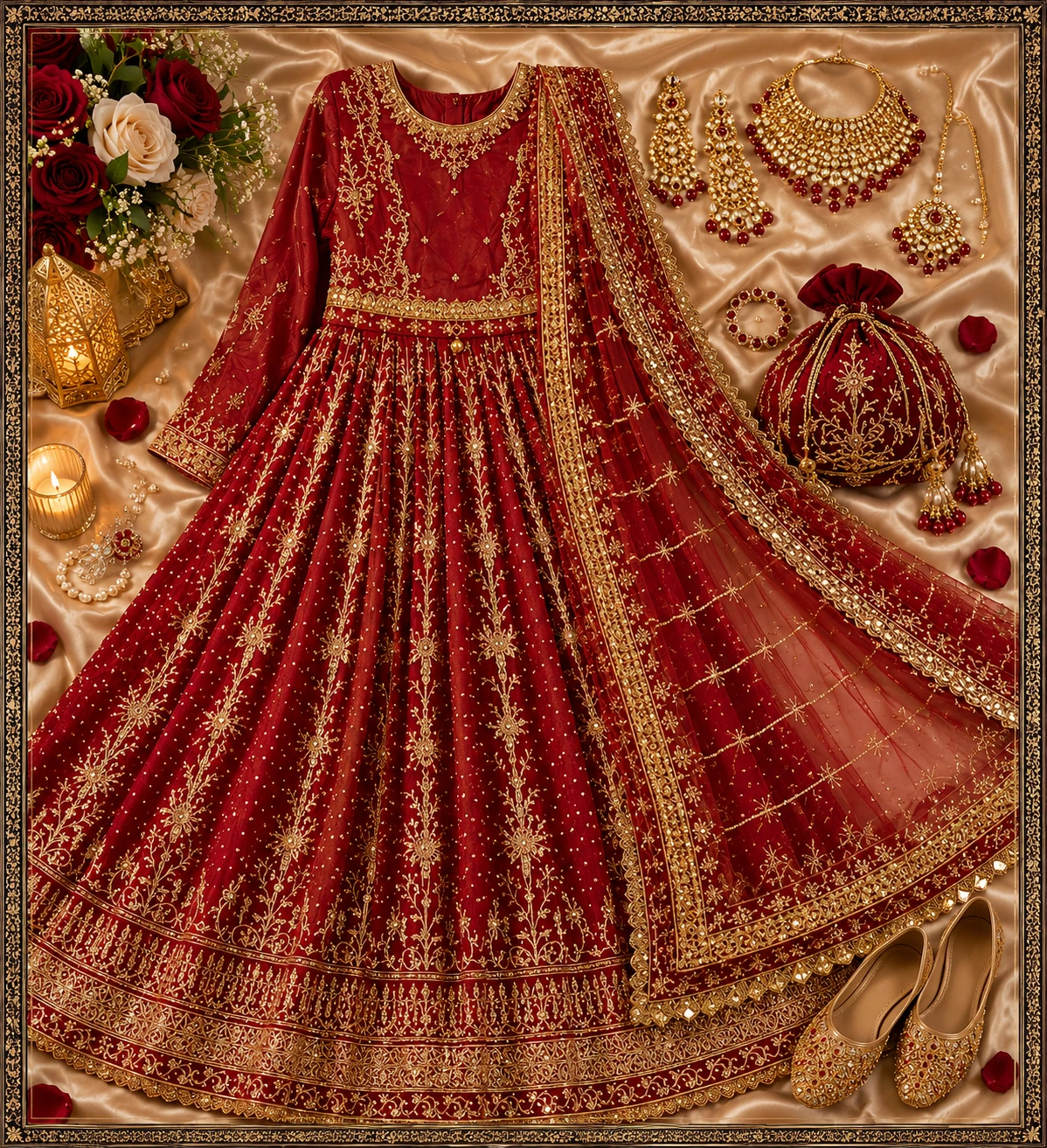
Red will never leave the bridal conversation in Pakistan, but the way it is being worn in 2026 has evolved considerably. The flat, uniform crimson of previous decades has been replaced by layered, nuanced reds: wine-infused crimsons, tomato-tinted scarlets, and deep burgundy reds that carry more depth and sophistication under both daylight and venue lighting.
What has changed most dramatically is the embroidery. Contemporary red lehengas are moving away from all-over coverage toward structured placement: bold embroidered borders, statement blouses with otherwise minimal skirts, and deliberate negative space that lets the fabric breathe.
Classic red bridal lehenga for rent on RentNShine
02
Trending Fast
Soft Pastels Take Centre Stage
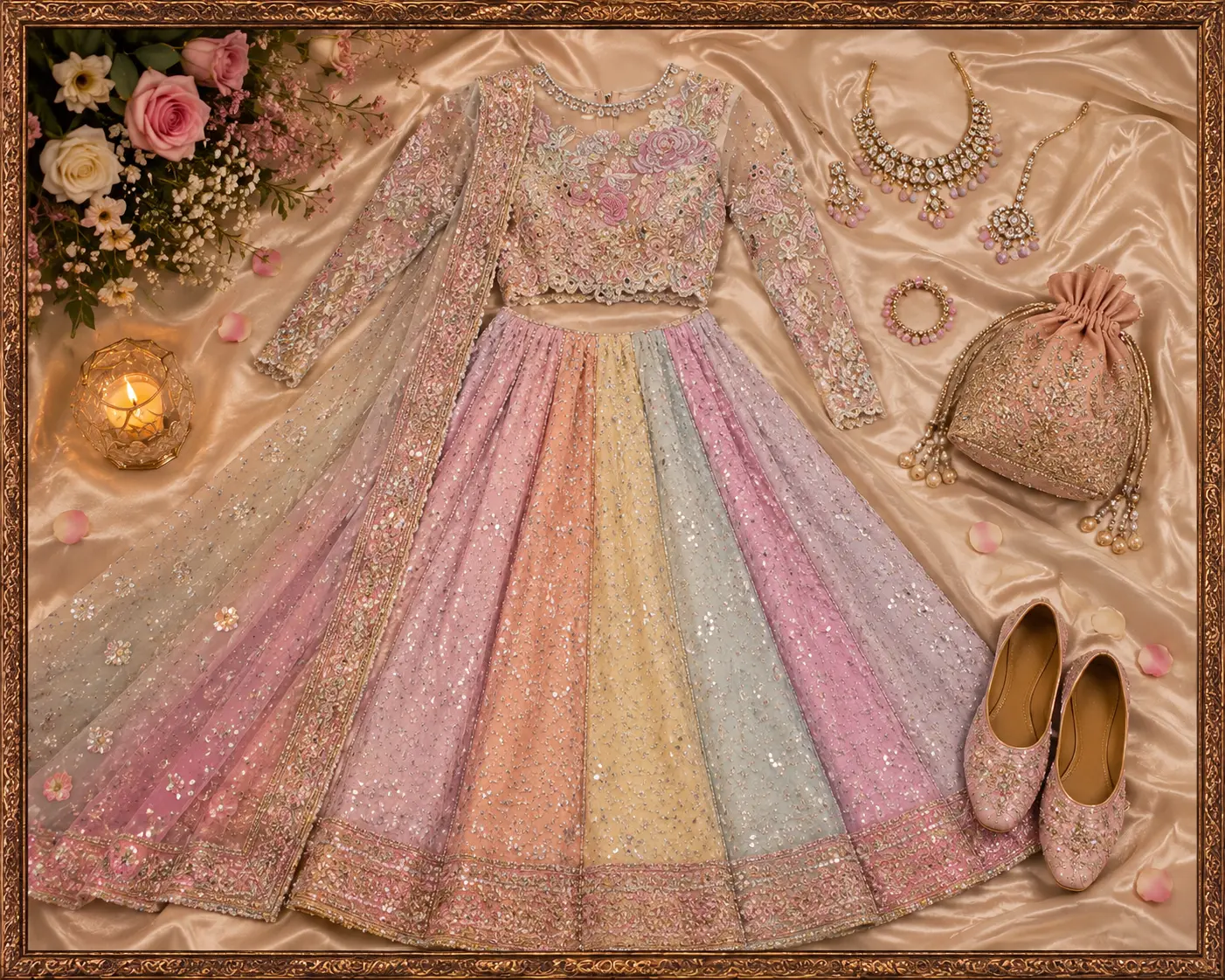
If there is one single trend that has most disrupted traditional Pakistani bridal norms in the last two years, it is the mainstream acceptance of pastels for main wedding functions. Blush pink, powder blue, lilac, sage green, and soft peach are now being worn to baraats and walimas with absolute confidence.
The reason this works so beautifully is contrast. Against the ornate settings of modern Pakistani wedding venues, a pale, ethereal lehenga stands out precisely because it does not try to compete. These brides are not whispering. They are speaking in a different language altogether, and it is turning heads.
Soft pastel bridal lehenga available for rent on RentNShine
03
Bold and Unapologetic
Emerald and Jewel Tones
For brides who want colour without following the red tradition, jewel tones are having a major moment. Emerald green, royal blue, deep plum, and sapphire are all performing strongly in Pakistan’s bridal market this season. These colours photograph extraordinarily well under venue lighting, create a striking contrast with gold and silver jewellery, and carry a regal quality that feels simultaneously modern and rooted in subcontinental tradition.
The embroidery pairings being chosen for jewel-tone lehengas are particularly interesting: gold zardosi on emerald, antique silver on deep plum, and mixed metallic threadwork on royal blue are all combinations that feel fresh in 2026 without being experimental to the point of risk.
Emerald and jewel-tone bridal lehengas available on RentNShine
04
Quiet Luxury
Ivory and Off-White for Nikah and Walima
There was a time when ivory or off-white bridal wear in Pakistan was considered unconventional. That time has passed. Ivory, champagne, and off-white lehengas are now a firmly established choice for nikah ceremonies and walima functions, embraced for their quiet elegance and their ability to let the craftsmanship of the garment speak without the distraction of colour.
When the base fabric is neutral, every element of the embroidery, lacework, and embellishment becomes visible in a way that stronger colours sometimes obscure. Ivory lehengas in 2026 are often the most technically impressive pieces in a collection and among the most requested on RentNShine for nikah and walima events.
Ivory and off-white nikah lehenga available to rent on RentNShine
05
Winter Perfect
The Velvet Renaissance
Velvet bridal lehengas are back, and they are back in a way that feels genuinely contemporary rather than nostalgic. The heavy, stiff velvet of earlier eras has been replaced by softer, more fluid velvet blends that drape beautifully and move with the wearer. Deep maroon, midnight navy, forest green, and rich plum are the velvet shades making waves this season.
Velvet is particularly well-suited to Pakistan’s winter wedding season, which peaks from October through February. It provides warmth without sacrificing formality, and its surface responds to embroidery in a way that creates an almost three-dimensional richness.
Velvet bridal lehenga for rent — perfect for winter weddings
06
Fashion Forward
The Architectural Silhouette
One of the most talked-about developments in Pakistani bridal fashion in 2026 is the shift toward what designers are calling the architectural silhouette: structured, sculptural shapes that move away from the full, circular flare of traditional bridal lehengas toward more deliberate, intentional forms.
This manifests in several ways: asymmetric hemlines, layered panels in contrasting fabrics, blouses with structural boning or exaggerated necklines, and skirts that create drama through volume control rather than sheer excess. The architectural lehenga is for the bride who wants to wear fashion, not just wear a wedding outfit.
Architectural silhouette bridal lehenga available on RentNShine
07
Most Photographed
Organza Layers, Light and Dreamy
Organza has become the fabric of the moment for bridal wear in Pakistan, and its dominance in 2026 shows no sign of slowing. The appeal is obvious: organza is lightweight, creates extraordinary movement, catches and diffuses light beautifully, and layers in ways that give even simple designs a sense of romantic complexity.
Multi-layered organza lehengas featuring four, five, or six layers of fabric in graduating shades of the same colour have been among the most photographed bridal looks at Pakistani weddings this year. They work particularly well for outdoor or destination weddings, where the movement of the fabric becomes part of the experience.
Organza layered bridal lehenga available to rent on RentNShine
08
Mehndi and Dholki
The Elevated Casual
The mehndi and dholki lehenga category has undergone perhaps the most dramatic evolution of all. The prevailing aesthetic in 2026 is what might be called elevated casual: pieces that are beautiful enough to be photographed from every angle but relaxed enough to allow the bride to actually enjoy herself, dance, and be present in the moment.
Mirror work, gota patti, and hand-block printing are the dominant embellishment choices for this category. Colour palettes tend toward yellows, mustards, tangerines, sea greens, and bright pinks. The shapes are often more relaxed than formal bridal silhouettes, with an emphasis on comfort and movement.
Mehndi and dholki lehenga available for rent on RentNShine
09
Confident Restraint
The Minimalist Bridal Lehenga
Against the backdrop of decades of maximalism in Pakistani bridal fashion, the minimalist lehenga has emerged as a genuinely radical choice and one that is gaining serious traction in 2026. These are pieces where the embroidery is sparse and intentional, the palette is restrained, and the overall effect is one of calm confidence rather than overwhelming opulence.
This trend is particularly strong among brides who are having smaller, more intimate weddings or who simply prefer a look that photographs cleanly and ages well. A minimalist bridal lehenga is often the choice of a bride who has thought carefully about what she actually wants to look like, rather than what she feels she is supposed to look like.
10
Heritage Revival
The Heritage Weave: Banarsi, Jamawar, and Khaddar
The final trend on this list is also the most enduring. Heritage weaves: Banarsi silk, Jamawar, and increasingly Khaddar for winter weddings: are experiencing a significant revival among Pakistani brides who want their bridal outfit to carry cultural meaning as well as visual beauty.
Banarsi silk lehengas in particular are having a major moment, with their intricate woven brocade patterns providing a level of richness that no amount of post-production embroidery can replicate. These pieces feel like heirlooms on the day they are first worn, which makes them ideal candidates for the rental model.
Banarsi silk heritage weave lehenga available to rent on RentNShine
How to Choose the Right Trend for Your Wedding
Ten trends is a lot to navigate. Here is a practical framework for narrowing down the right look for your specific wedding.
Match the Function
Velvet and heritage weaves suit baraat and formal evening events. Organza and pastels work across multiple functions. Mehndi mirror work would feel out of place at a walima. Think about where you will be wearing the lehenga before falling in love with a style.
Consider Your Venue
A minimalist lehenga in an ornate venue creates a beautiful tension. Jewel tones thrive under warm venue lighting. Pastels and ivory look most extraordinary in natural light or clean, modern spaces. Your venue is a co-designer.
Think About Photographs
How a lehenga looks in the mirror is often very different from how it reads in photographs. Organza creates incredible movement shots. Architectural silhouettes produce strong editorial images. Ask your photographer what will work best.
Rent Across Functions
You do not have to commit to a single look for your entire wedding week. Wear a pastel organza for your mehndi, a heritage weave for your baraat, and a clean ivory piece for your walima. Three extraordinary looks for a fraction of what one purchased lehenga would cost.
Rent Your Dream Bridal Lehenga Today
Browse hundreds of stunning bridal lehengas available for rent right now across Pakistan. New arrivals every week for the 2026 wedding season.
Starting from Rs 14,000Free DeliveryAll Sizes AvailableEvery FunctionNationwide
Pakistani bridal fashion in 2026 is more exciting, more diverse, and more accessible than it has ever been. The trends shaping this season offer every bride the opportunity to find a look that feels genuinely, specifically hers.
And with RentNShine, finding that look no longer requires an enormous financial commitment. Browse, book, wear, and shine. Then return. It is the smarter way to be the most beautiful person in the room.
Ready to find your lehenga? Visit rentnshine.com/bridal/lehenga and browse the full collection available to rent right now, filtered by your city, size, and function.
“Rent the Dress. Own the Moment. The trends change. Your savings stay.”
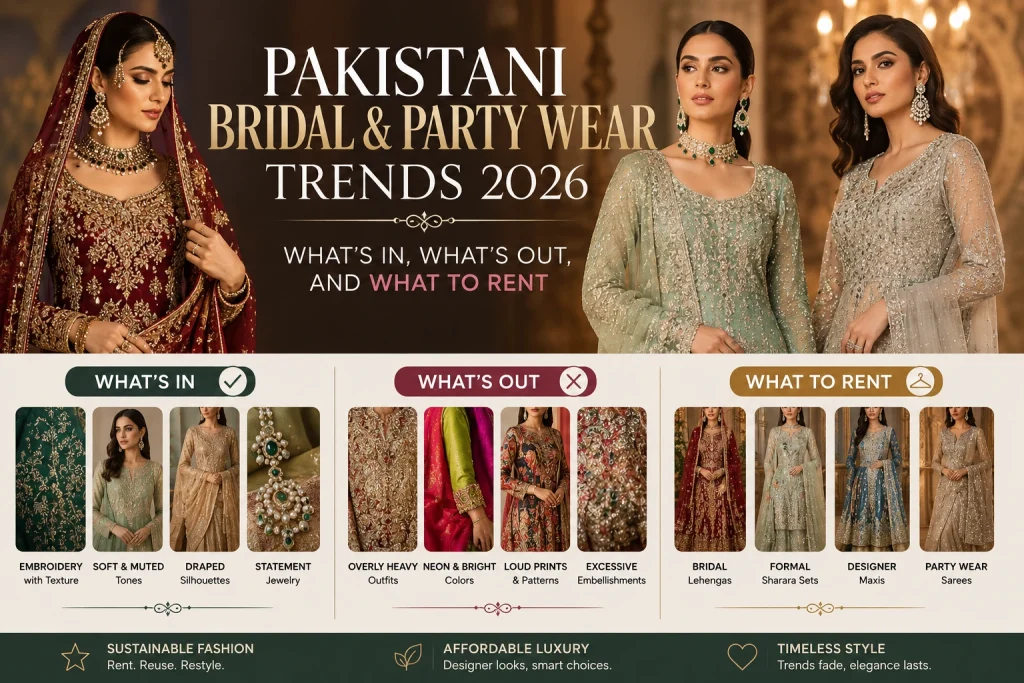
There is a quiet revolution happening in Pakistani fashion right now, and most women have not even noticed it. The trends are shifting faster than ever before what was the must-have lehenga colour last year is already starting to feel dated, and what was once considered too bold is now the most photographed look at every wedding. Designers are reinventing the classics. Brides are rejecting the heavy, suffocating outfits of past seasons in favour of pieces that actually feel comfortable to wear all night. And the smartest women in Pakistan are no longer buying these trends they are renting them through RentNShine, Pakistan’s leading dress rental marketplace.
If you have a wedding to attend, a walima to host, or a party to dress up for in the coming months, this guide is for you. We are breaking down every major bridal and party wear trend that is taking over Pakistani fashion in 2026 colours that everyone is wearing, cuts that are turning heads, fabrics that are stealing the spotlight, and styles that are quietly going out of fashion. By the end of this article, you will know exactly what to wear, where to find it, and most importantly — how to wear the most expensive trend of the year without paying its full price. Let us dive in.
────────────────────────────────────────────
1. Bridal Lehenga Trends in Pakistan 2026
The bridal lehenga remains the single most important outfit of any Pakistani wedding, but in 2026, it is being completely reimagined. Brides are moving away from the suffocatingly heavy lehengas of the past and choosing pieces that are visually rich yet wearable for an entire evening. Layered dupattas are replacing single heavy ones. Lighter borders are paired with statement blouses. And the colour palette has expanded dramatically deep wines, jewel-toned emeralds, dusty roses, and unexpected ivory tones are appearing alongside the classic reds. The result is a generation of brides who look stunning without sacrificing comfort, and our bridal lehenga collection reflects every one of these emerging looks.
What makes 2026 particularly exciting is the rental shift. Bridal lehengas worth anywhere from one to ten lakhs are now available on rent through verified sellers, opening up access to designer-level pieces that most brides would never consider buying outright. Heavy embroidery is back, but in a more refined way fewer mirrors, smarter zardozi, and more thoughtful placement. Brides are also experimenting with split-skirt designs, contemporary blouses, and modular dupatta styles that can be re-draped in different ways through the night. The smartest move this season is to rent the trend, photograph the moment, and move on without a five-lakh outfit collecting dust in your wardrobe for the next decade.
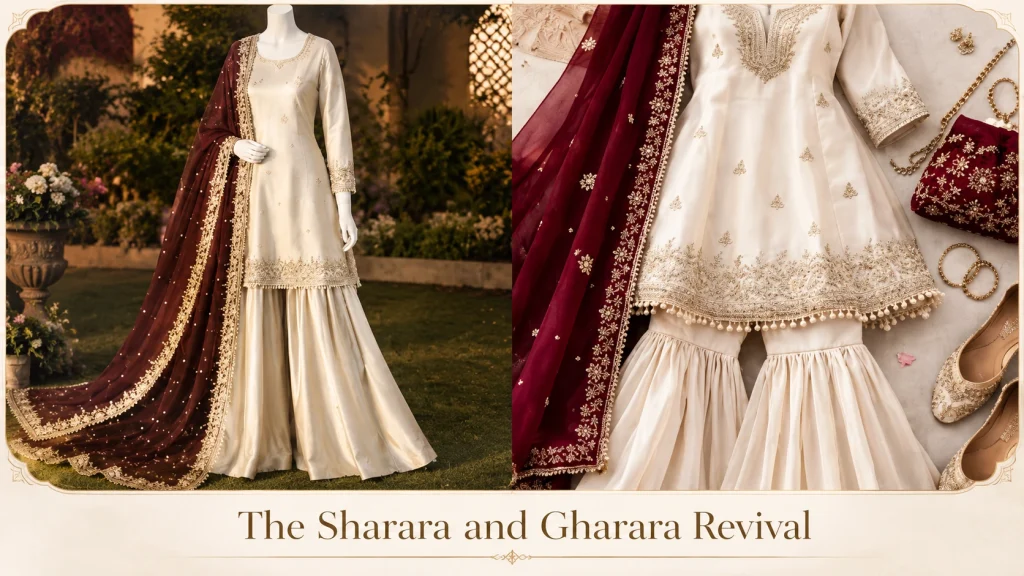
2. The Sharara and Gharara Revival
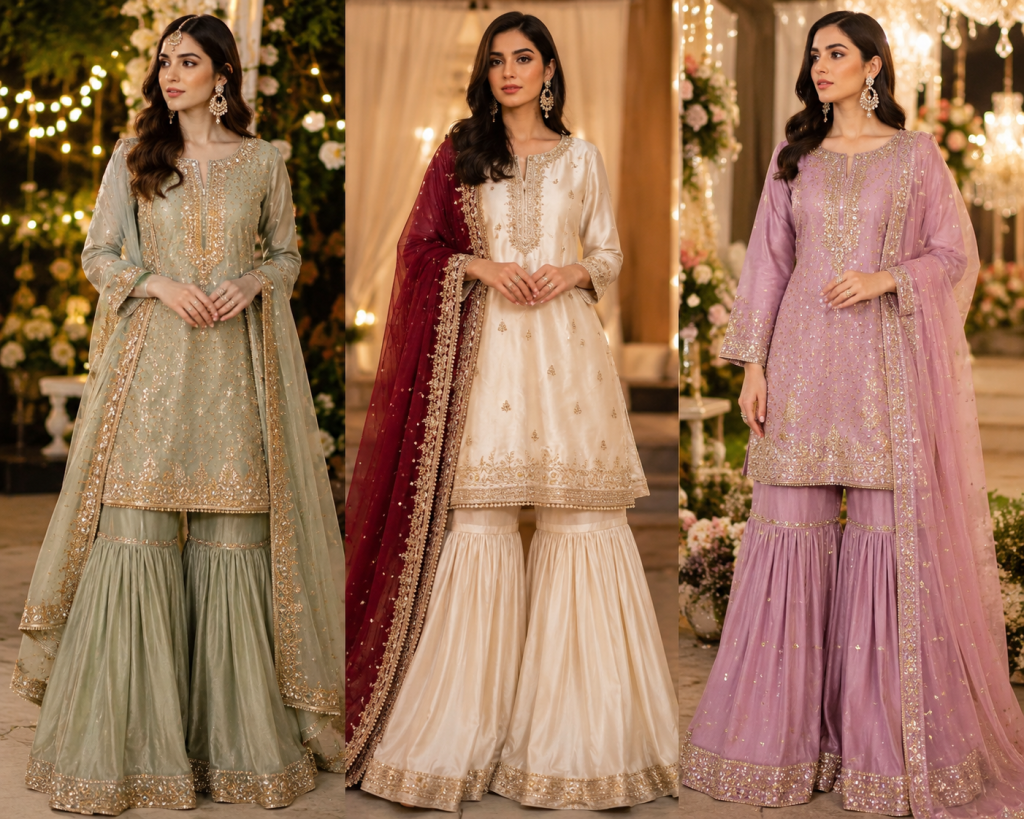
If there is one trend that has taken Pakistani fashion completely by surprise in 2026, it is the dramatic return of the sharara and gharara. Once considered old-fashioned and reserved for grandmother’s wedding albums, these silhouettes have come roaring back as the most photographed outfits at nikkah and mehndi events. Modern brides are embracing the wide, flowing legs and the heritage embroidery, pairing them with cropped blouses, dramatic dupattas, and statement jewellery. The look is rooted in Mughal-era elegance but feels surprisingly fresh today. You can explore the latest pieces in our bridal sharara collection and our bridal gharara range, both updated regularly with new arrivals from across Pakistan.
What is driving the revival is partly nostalgia, partly the rise of social media wedding content where these silhouettes photograph beautifully. Brides are choosing shararas for nikkah ceremonies because they are easier to move in and feel less heavy than a traditional lehenga. Ghararas, with their tighter knees and flared bottoms, are gaining ground for mehndi events where dancing is non-negotiable. The colour story this year leans heavily into mint greens, soft yellows, dusty pinks, and old golds soft, romantic shades that feel modern without abandoning tradition. Renting one of these pieces is the smartest move because the silhouette is trendy now, and trends move on; owning a sharara that was peak 2026 in 2028 is a quick way to date yourself.
3. Maxi Dresses and Gowns — The New Walima Favourite
The bridal maxi and gown trend continues its quiet domination of walima receptions across Pakistan. Brides who want a softer, more contemporary look for their second event are turning to floor-length gowns in soft pastels, fitted silhouettes, and lightly embellished fabrics. The 2026 version of this trend is moving away from corset-style structures and embracing flowy, comfortable cuts that drape naturally. Champagne, ivory, blush, sage, and powder blue are dominating walima outfit choices, often paired with subtle gold or pearl embellishments. Browse our maxi and gown collection to see what is trending right now in this category.
What makes this trend particularly rent-friendly is the price gap between buying and renting. A designer walima gown can cost anywhere from sixty thousand to two lakhs, but most brides only wear it for one evening. Renting opens up access to pieces from top Pakistani designers at a small fraction of their retail value. The fitted-bodice and flowing-skirt silhouette is universally flattering, the colours photograph beautifully under wedding lighting, and the styling possibilities are endless. Pair it with statement earrings, a simple updo, and minimal jewellery and you have a walima look that will outlive every trend cycle without ever needing to be repurchased.
4. Party Wear Trends — Mehndi, Barat, and Walima Guest Looks
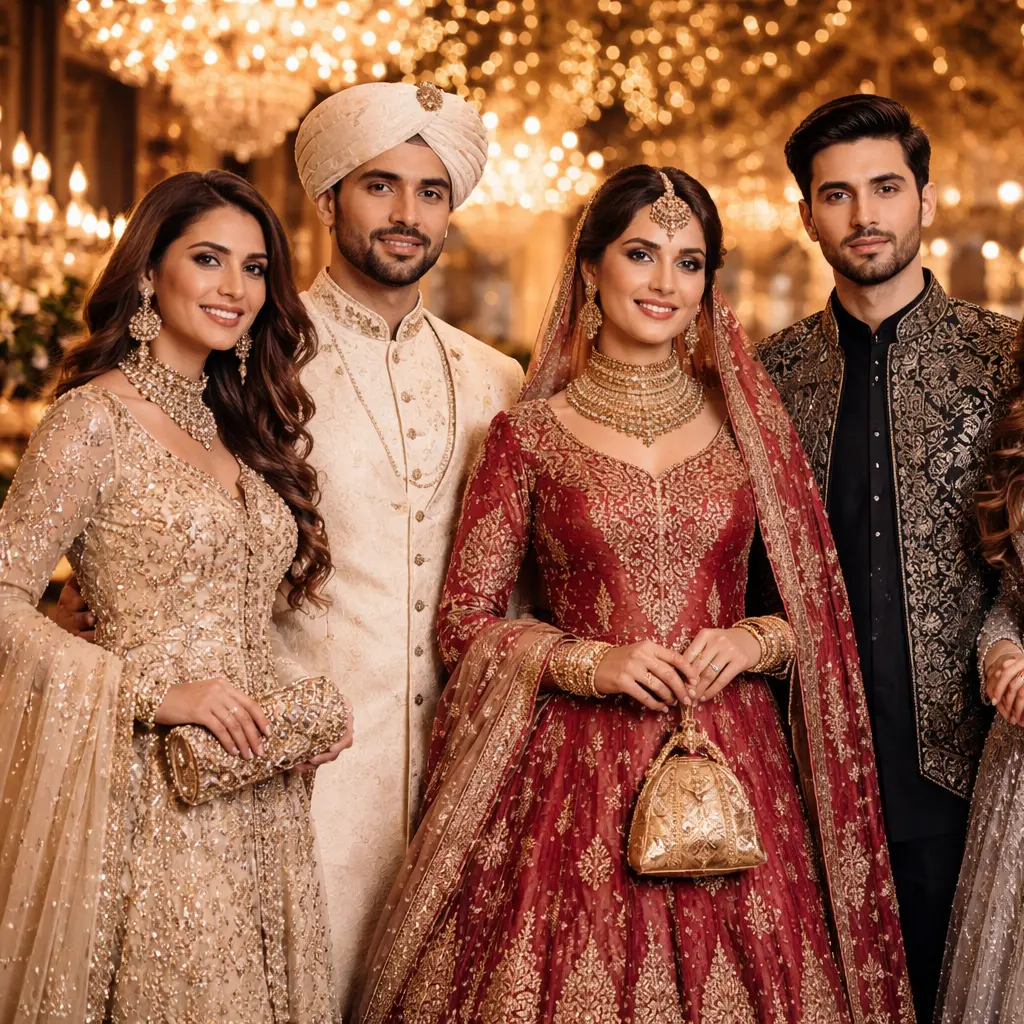
Party wear is where 2026 trends become genuinely exciting, especially for the wedding guests, sisters of the bride, and close friends who attend dozens of events each season. Mehndi looks this year are embracing bright florals, mirror work, and oversized embellished dupattas in vibrant yellows, oranges, and parrot greens. Barat guest outfits are leaning into rich jewel tones emerald, sapphire, ruby, and deep plum with statement embroidery and contemporary cuts. Walima guest looks are softer, sticking to pastels, ivories, and rose golds. Our entire party wear collection is regularly updated to reflect these seasonal shifts.
The smartest move for any wedding guest in 2026 is to stop buying for individual events and start renting strategically. You can attend a mehndi, barat, and walima for the same friend’s wedding in three completely different looks for less than the cost of buying one new outfit. The styles available include party wear maxis, gowns, embellished kurtas with shararas, designer pret pieces, and fancy three-piece suits across every budget. Filter by event type, colour, and city to find exactly what you need. The math is simple rent three different looks for the price of one purchase, and avoid the embarrassment of being photographed in the same outfit at multiple events.
5. Groom Fashion Trends 2026
Pakistani grooms are finally getting the fashion attention they deserve in 2026. The classic black sherwani is no longer the default — grooms are experimenting with deep wines, forest greens, charcoal greys, and even ivory tones for their main events. Prince coats are making a strong comeback for barat ceremonies, with structured shoulders and contrast piping leading the trend. Waistcoat suits with embroidered details are dominating mehndi and mayun events. And modern kurta shalwar styles in luxe fabrics are becoming the go-to for nikkah and walima. Explore our sherwani collection, prince coat range, and waistcoat suits to see the trend in action.
Renting groom wear is even more financially sensible than renting bridal because most grooms wear their outfits for fewer hours and far fewer events. A designer sherwani that costs one to three lakhs to buy can be rented for a small percentage of that. The same goes for prince coats, embroidered waistcoat suits, and tailored formal suits. Pakistani grooms in 2026 are openly choosing rental over purchase, and the social stigma around it has completely disappeared. Pair your rented sherwani with a quality kulla, statement brooch, and well-polished khussa, and you will photograph every bit as well as a groom who spent five times more on the same look.
6. The Pakistani Colour Palette of 2026
Colour is where 2026 makes its boldest statements, and the shifts are dramatic compared to previous years. The traditional bridal red is sharing the spotlight with deeper, more sophisticated alternatives. Designers across Pakistan are pushing emerald greens, dusty rose, oxblood, champagne, ivory, and even unexpected shades like mint and lavender into the mainstream bridal conversation. For party wear and guest looks, jewel tones are dominating evening events while pastels rule the daytime ones. Metallic accents — old gold, antique silver, and rose gold — are appearing more than ever in embellishments and accessories.
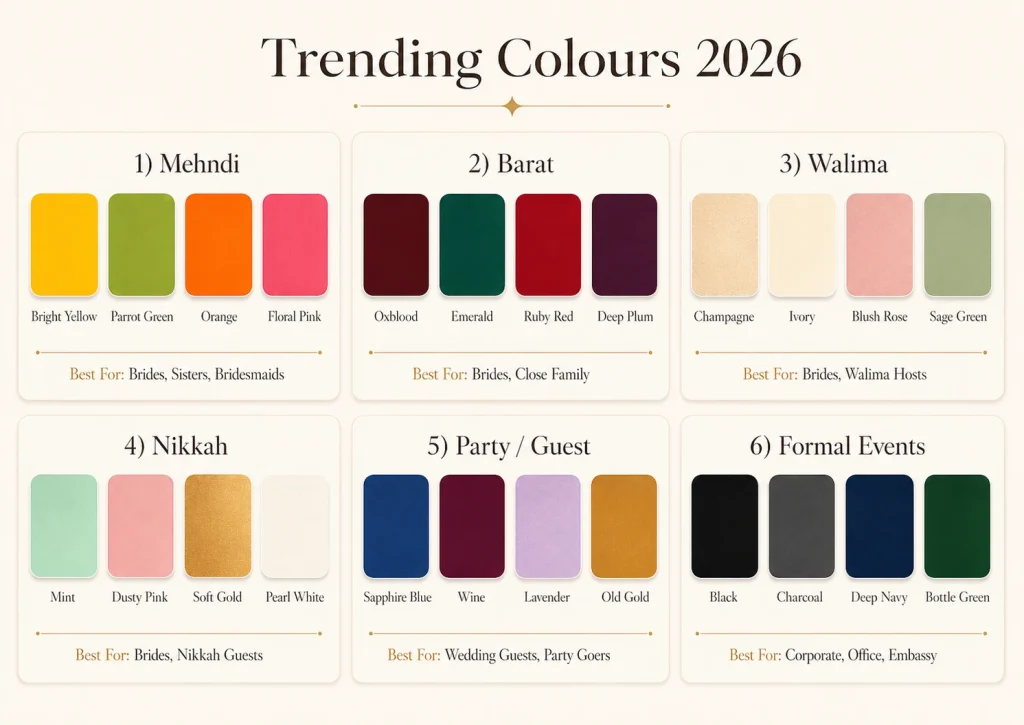
Below is a quick visual reference for the 2026 Pakistani fashion colour palette, broken down by event type. Use it as a guide while browsing our collection you can filter by colour directly on the platform to find your perfect look. Note that these are general trends, and individual styling always trumps trend-following. The point is to understand the direction Pakistani fashion is moving in 2026, so your outfit feels current rather than dated. Pair these colours with the right accessories from our accessories collection to complete the look authentically.
Event
Trending Colours 2026
Best For
Mehndi
Bright Yellow, Parrot Green, Orange, Floral Pink
Brides, Sisters, Bridesmaids
Barat
Oxblood, Emerald, Ruby Red, Deep Plum
Brides, Close Family
Walima
Champagne, Ivory, Blush Rose, Sage Green
Brides, Walima Hosts
Nikkah
Mint, Dusty Pink, Soft Gold, Pearl White
Brides, Nikkah Guests
Party / Guest
Sapphire Blue, Wine, Lavender, Old Gold
Wedding Guests, Party Goers
Formal Events
Black, Charcoal, Deep Navy, Bottle Green
Corporate, Office, Embassy
7. Fabric and Embellishment Trends 2026
Fabrics are quietly going through their own revolution in 2026, and the shift is more significant than most people realise. Heavy raw silk and traditional zari are sharing space with lighter, more breathable alternatives like organza, tissue, and high-quality net. Velvet is making a strong comeback for winter weddings, particularly in deep jewel tones. Chiffon and georgette continue to dominate party wear because they drape beautifully and photograph well under any lighting. Pakistani designers are also experimenting with handwoven fabrics, mixing tradition with contemporary cuts in ways that feel genuinely fresh.
On the embellishment front, the year belongs to refined craftsmanship rather than maximum coverage. Smart zardozi placement, delicate sequin work, three-dimensional floral applique, and intricate hand-embroidered details are replacing the heavy mirror-and-stone overload of past years. Pearl accents are everywhere — on dupattas, blouses, and even shararas. The new aesthetic prizes elegance over excess, with brides and party-goers favouring pieces that whisper rather than shout. This shift is excellent news for renters because lighter, more refined outfits are also easier to wear, easier to transport, and easier to maintain — which means more sellers are listing premium pieces on our platform.
8. What’s OUT in 2026 — Trends to Quietly Retire
Every trend story has a flip side, and the trends fading out of Pakistani fashion this year deserve mention. If you are still holding onto any of these from past seasons, this is the polite signal to retire them.
Heavy gota-and-mirror overload — replaced by refined, placed embroidery
Single dupatta drapes — replaced by layered or twin-dupatta styling
Standard bridal red on its own — replaced by red with unexpected accent colours
Excessive corset structures — replaced by softer, flowy silhouettes
Matching head-to-toe colour palettes — replaced by contrast pairings
Heavy traditional sherwanis in plain black — replaced by colour and texture experimentation
Bulky bridal jewellery sets that overwhelm the outfit — replaced by curated statement pieces
Stiff Banarsi silks for full lehengas — replaced by softer, drapier fabrics
None of these styles are wrong — they were beautiful in their moment and remain perfectly acceptable for personal preference. But if you are tracking what is genuinely current in Pakistani fashion right now, knowing what is fading is just as important as knowing what is rising. The advantage of renting is that you never get stuck with a trend that has aged. You wear it during its peak moment, return it, and move on to the next look without financial regret. Browse our full bridal collection or party wear range to see only the latest, freshest pieces.
9. How to Rent These Trends Instead of Buying Them
Here is where the entire conversation comes together. Every single trend covered in this guide — the lehengas, shararas, gowns, party wear, and groom outfits — is available to rent through RentNShine without the heavy price tag of ownership. The platform connects you with verified sellers across Pakistan, gives you nationwide courier delivery, and protects every transaction through a clear dispute resolution policy. You can browse by city, size, colour, and event type, which means finding your perfect 2026 trend takes minutes rather than the weeks of designer-hunting that buying would require. To understand the full process, visit our How It Works page.
The renting process is simpler than most people imagine, and most first-time renters wonder why they were not doing this all along. You browse the collection, select your dates, confirm your booking with a secure payment, and your outfit arrives at your doorstep before the event. Dry cleaning is typically included in the rental price. After the event, you return the outfit through courier and your security deposit is refunded once the piece is checked. You can attend three weddings in three completely different designer looks for less than the cost of buying one new outfit — and you never have to find storage space for any of them.
Browse. Book. Wear. Return. That simple.
10. Already Own Last Year’s Trends? Turn Them Into Income
If you are reading this guide and thinking about the unworn lehengas, gowns, and party wear sitting in your wardrobe right now — you are sitting on real money. Trends move fast, but luxury Pakistani outfits hold their visual appeal for years if they have been worn just once. RentNShine gives you a direct way to turn that unused wardrobe into a steady source of income. You can list your dress for rent in under ten minutes, and become a seller without needing a shop, staff, or any prior experience.
Thousands of Pakistani women are already doing this — housewives, working professionals, mothers, brides who got married last year and never wore their walima outfit again. The platform handles the marketplace side: finding renters, processing payments, managing logistics, and resolving disputes. Your job is simply to maintain the outfit between bookings. Each rental brings you direct income from clothes you already own and already love. Your wardrobe stops being a storage problem and starts being an asset. Read our full Seller and Rental Agreement to understand exactly how the model works.
────────────────────────────────────────────
Wear the Trends. Skip the Price Tag.
Browse Pakistan’s most up-to-date rental collection — every 2026 trend, every event, every budget.
1. What are the biggest Pakistani bridal lehenga trends for 2026?
In 2026, Pakistani bridal lehengas are moving towards lighter, more wearable silhouettes with layered dupattas, refined embroidery, and an expanded colour palette beyond the classic red. Oxblood, emerald, dusty rose, and even ivory tones are dominating. Browse the latest options in our bridal lehenga collection to see these trends in action.
2. Are sharara and gharara really back in fashion in 2026?
Yes, and stronger than ever. Modern brides are choosing sharara and gharara silhouettes for nikkah and mehndi events because they offer heritage elegance with better comfort and movement than traditional lehengas. Our sharara range and gharara range are updated regularly with new arrivals.
3. What colours should I avoid wearing as a wedding guest in 2026?
Pakistani wedding etiquette generally advises guests to avoid pure white (reserved for the bride at walima in many circles), pure red (reserved for the bride at baraat), and any colour the bride is specifically wearing. Beyond that, you have full freedom to choose from the rich jewel tones, soft pastels, and rose gold metallics that dominate guest fashion in 2026.
4. How can I rent the latest 2026 trends across Pakistan?
Visit RentNShine, browse the relevant category for your event, filter by city and size, and book directly. Nationwide courier delivery means you can rent from anywhere in Pakistan. Read our full How It Works guide for the complete process and check our shipping policy for delivery details.
5. Can I earn money by listing my outfits from past years on RentNShine?
Absolutely. If your outfits are in good condition, they can earn you steady rental income from new bookings. Many sellers on RentNShine are housewives, working professionals, and brides who listed their wedding outfits after their own events. You can become a seller and list your first outfit in under ten minutes.
────────────────────────────────────────────
Final Thoughts
Pakistani bridal and party wear trends for 2026 are richer, more refined, and more wearable than they have been in years. The shift towards comfort, refined embellishment, and bolder colour storytelling is a welcome change after seasons of heavier, less practical fashion. Brides are looking better than ever because they are choosing outfits that actually let them enjoy their wedding day. Guests are looking sharper because variety has replaced the awkward repeat-outfit problem. And grooms are finally getting the fashion attention they have always deserved.
The smartest fashion move in 2026 is no longer about buying — it is about renting strategically. Every trend in this guide is available through RentNShine at a small fraction of retail cost. You get the trend, you get the photographs, you get the moment — and you keep your savings, your wardrobe space, and your sanity. Whether you are a bride planning her wedding, a guest preparing for a busy season, or a groom finalising his looks, your perfect 2026 outfit is just a few clicks away.
Rent the Dress. Own the Moment. The trends move on. Your savings stay.
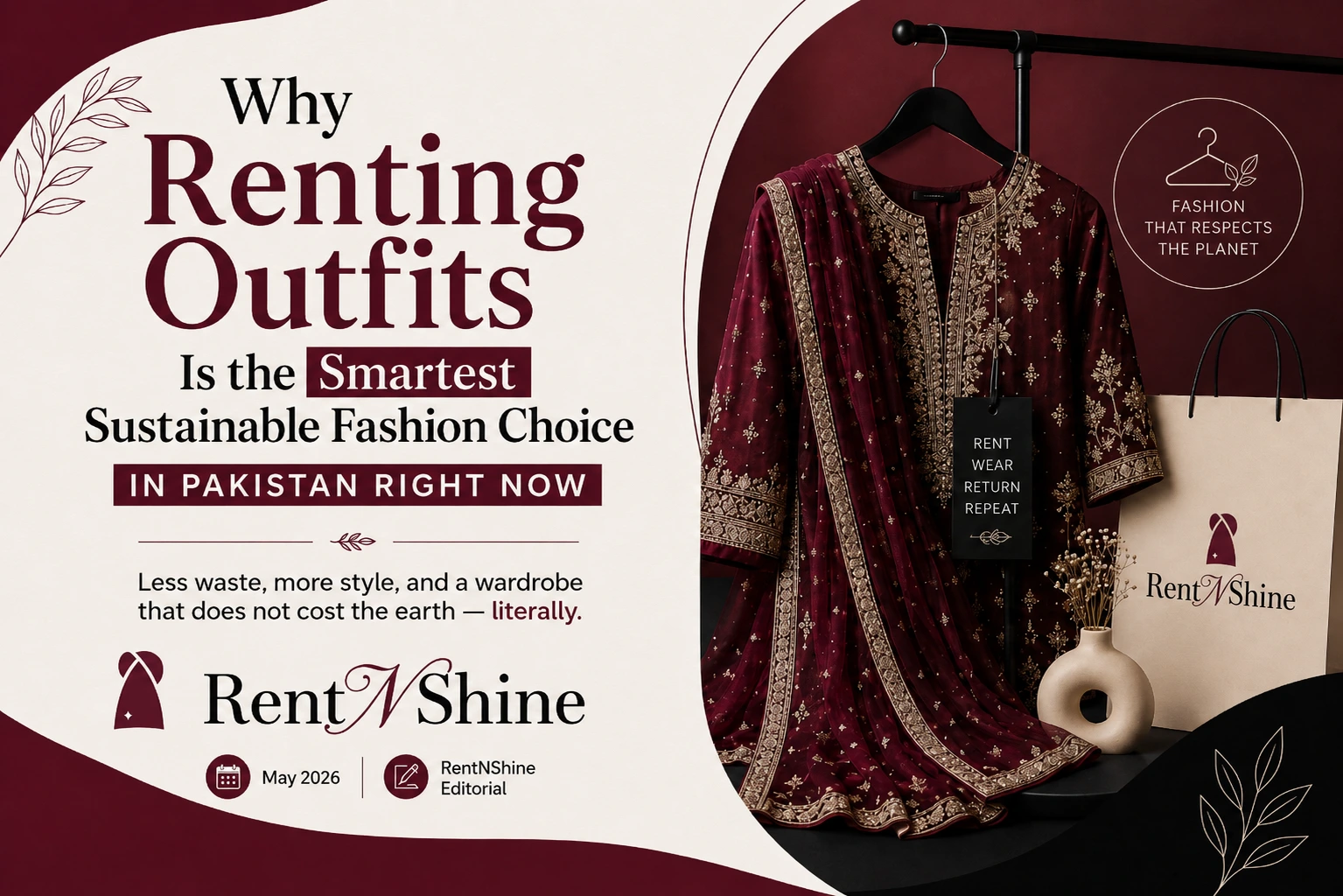
Sustainable Fashion in Pakistan: Why Renting Outfits Is the Smarter Choice
Most of us have a wedding or a formal event coming up at least three or four times a year. And most of us buy a new outfit for each one. That outfit gets worn once, maybe twice, then sits in the wardrobe collecting dust. Sound familiar? This is exactly the problem that sustainable fashion is trying to fix. And in Pakistan, renting designer outfits is quickly becoming one of the most practical ways to be a more mindful dresser.
This post covers what sustainable fashion actually means, why it matters right now in 2026, and why renting rather than buying is one of the best decisions you can make for your wardrobe and for the environment.
Renting over buying: the smarter, more sustainable wardrobe choice for Pakistani women in 2026
What Is Sustainable Fashion and Why Should You Care?
Sustainable fashion is about making clothing choices that cause less harm to the environment and to the people who make clothes. It covers everything from the fabrics used in a garment to how long that garment stays in use before being thrown away.
The fashion industry is one of the biggest sources of waste and pollution in the world. A large number of cheap, trendy garments are worn only a handful of times before ending up in landfill. Studies on sustainable fashion show that some of the cheapest garments are worn as few as seven times before being discarded. That is a lot of resources — water, fabric, human labour — for something used only a few times.
7x
Average wears before a fast fashion piece is thrown away
$350B
Projected size of the second-hand fashion market globally
2026
Year circular fashion became a mainstream industry standard
In Pakistan, shoppers are waking up to these realities. More women are asking whether they really need to own every outfit they wear, especially for weddings, Eid celebrations, and formal dinners. The answer, more and more, is no.
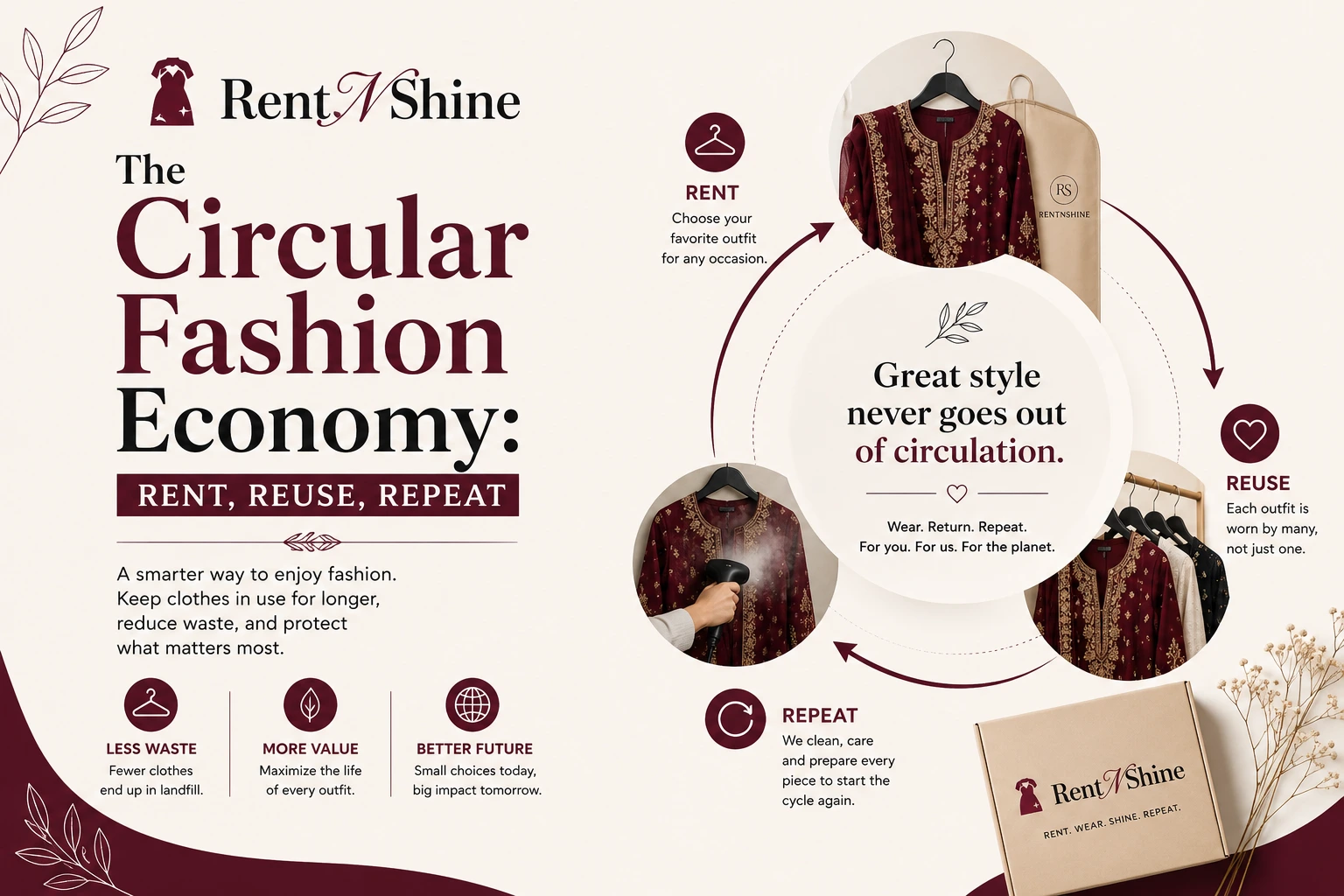
The Circular Fashion Economy: Rent, Reuse, Repeat
The circular fashion economy keeps clothes in use longer, cutting waste at every stage
Circular fashion is a concept built on one simple idea: keep clothes in use for as long as possible. Instead of buying, wearing once, and discarding, the circular model encourages renting, reselling, repairing, and recycling.
Dress rental sits right at the heart of this movement. When you rent a designer outfit, that same outfit can be worn by dozens of different people over its lifetime. This means far fewer new garments need to be produced, and far less fabric ends up as waste. It is one of the most direct ways a consumer can support a circular approach to fashion.
“Rental fashion allows you to enjoy fresh styles while supporting a more sustainable and circular approach to fashion — dressing well while treading lightly on the planet.”
Globally, major fashion platforms now use AI to match users with styles that fit their body and taste. Eco-friendly packaging and carbon-conscious deliveries have become the norm for forward-thinking rental services. Pakistan is catching up fast, and services like RentNShine are leading that conversation locally.
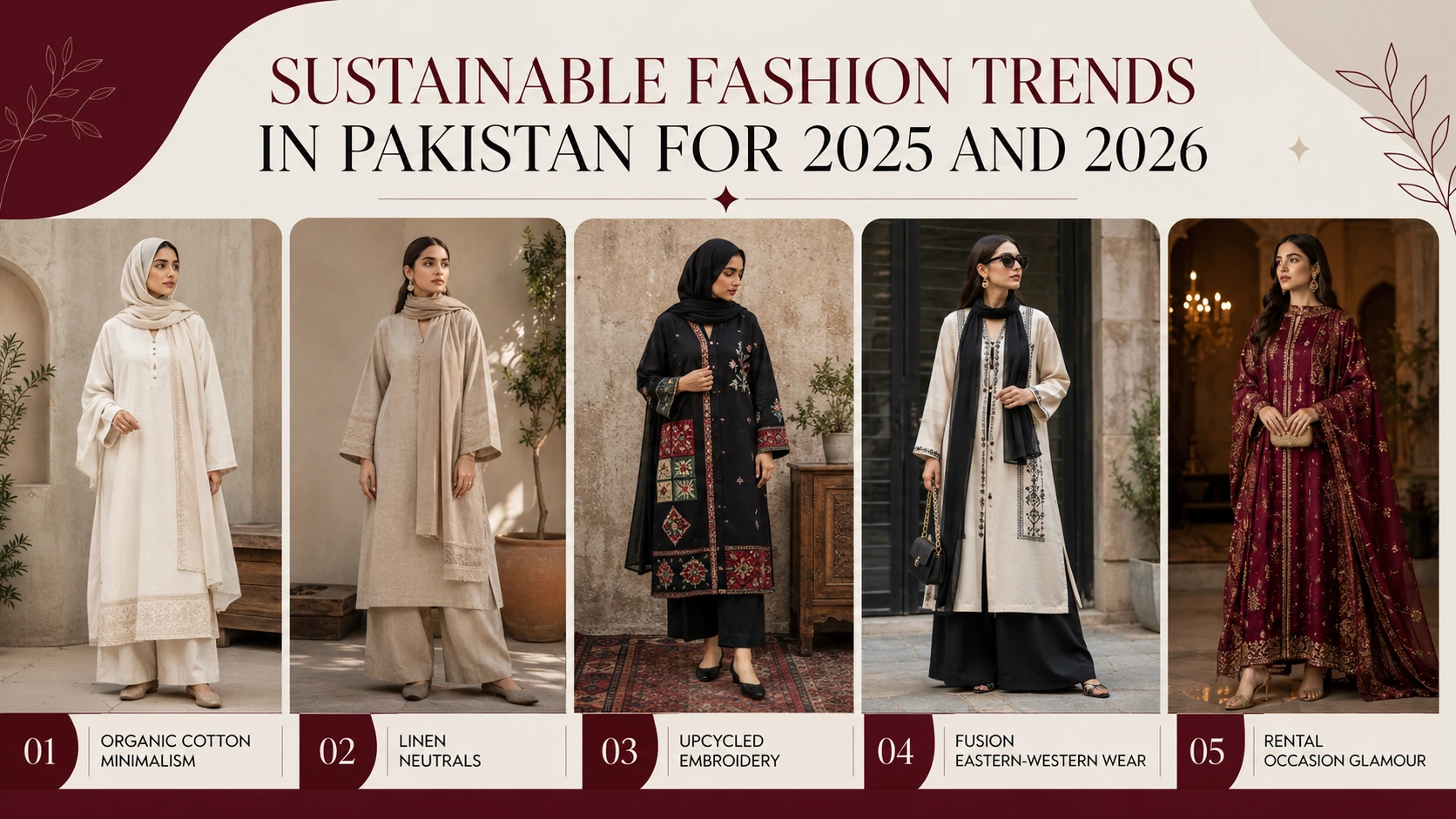
Sustainable Fashion Trends in Pakistan for 2025 and 2026
Pakistani fashion in 2025 and 2026 is shifting toward eco-friendly fabrics and more mindful wardrobe choices
Pakistani fashion has always had a strong sense of identity. The use of fine fabrics like silk, chiffon, and hand-embroidered cotton is deeply rooted in the culture. What is changing now is the growing awareness around how these clothes are made and how long they are actually worn.
Eco-Friendly Fabrics Are Taking Centre Stage
Designers across Pakistan are moving toward organic cotton, linen, and recycled fabrics. Cotton and linen are popular not just for how they feel but also for their lower environmental footprint compared to synthetic materials. Brands and consumers alike are paying more attention to what a garment is made from and whether it will last.
Slower, More Thoughtful Buying
Pakistani consumers, particularly younger shoppers, are becoming more mindful about their fashion decisions. Rather than rushing to buy something new for every occasion, many are now exploring rental options, second-hand shopping, and upcycling. This shift reflects a broader global move toward quality over quantity.
Eco-Conscious Choices at Every Price Point
Sustainable fashion used to feel like something only certain people could afford. That is changing. Renting a high-quality designer piece for a fraction of its retail price means that more women can dress beautifully without spending a fortune or adding to the waste problem.
Why Renting an Outfit Is Better for the Planet
When you rent rather than buy, you are directly reducing the demand for new clothing production. Every rented outfit means one less piece that needs to be manufactured, packaged, shipped, and eventually discarded.
Real Benefits of Renting Over Buying
One rented dress can be worn by many people over its lifespan, reducing the need for new production.
You get to wear fresh, high-quality outfits for every occasion without building up a wardrobe full of rarely worn pieces.
Rental services handle cleaning and care professionally, which means longer garment life and less household resource use.
You save money while still wearing something beautiful and well-made.
You reduce the pressure to keep buying as trends change each season.
Rental fashion is also smarter economically. A designer outfit in Pakistan can cost anywhere from PKR 20,000 to several lakhs. Wearing it once and storing it forever is a poor return on that investment. Renting the same piece for a fraction of the cost, wearing it beautifully, and returning it makes far more financial sense.
How to Build a More Sustainable Wardrobe Without Starting Over
Going sustainable does not mean throwing out everything you own. It means making smarter choices going forward. Here are some practical steps you can take right now.
Rent for Special Occasions
Weddings, engagements, mehndi ceremonies, Eid gatherings, and formal dinners are the perfect occasions to rent rather than buy. You get to wear something special without it sitting unused in your cupboard for the next five years. Browse the sustainable fashion collection at RentNShine to see the kind of outfits available for rent in Pakistan.
Choose Quality Over Quantity
When you do buy, invest in pieces that are well-made and versatile. A good quality shalwar kameez or a classic formal top will serve you across many occasions if it is made from durable fabric and cut in a timeless style.
Look After What You Already Own
Proper care extends the life of a garment significantly. Store embroidered pieces correctly, avoid over-washing delicate fabrics, and repair items when possible rather than replacing them immediately.
Resell or Donate Outfits You No Longer Wear
If something is sitting unworn in your wardrobe, pass it along. Giving a garment a second life reduces waste and helps someone else find something lovely to wear.
What the World Is Saying About Fashion Rentals in 2026
Globally, the conversation around clothing rental has shifted from niche to normal. The rise of circular fashion has moved rental services from being seen as a budget option to being recognised as a genuinely smart, eco-conscious choice.
Major brands and platforms around the world are now integrating rental and resale into their business models because they understand that consumers are demanding it. Sustainability is no longer a marketing bonus — it is a core expectation. In Pakistan, this shift is gathering pace, and rental platforms are at the front of that change.
The second-hand and rental market globally is on track to reach enormous scale in the coming years. Pakistani consumers who join this movement now are not just making a fashion choice. They are making a values choice about the kind of industry they want to support.
Frequently Asked Questions About Sustainable Fashion in Pakistan
Is renting a dress really a sustainable choice?
Yes. When one dress is worn by many people rather than one, it reduces the total number of garments that need to be produced. Less production means less water use, less fabric waste, and a smaller carbon footprint overall. Rental is one of the most direct ways to support circular fashion.
What fabrics are considered eco-friendly for Pakistani outfits?
Cotton, linen, and organic cotton are among the most sustainable choices. These fabrics are biodegradable, often require less water to produce compared to synthetic alternatives, and tend to last longer. Many Pakistani designers are now prioritising these materials in their collections.
Can I find designer outfits for rent in Pakistan?
Yes. Platforms like RentNShine offer a wide selection of designer Pakistani outfits available to rent for weddings, parties, and special occasions. You can wear high-quality pieces at a fraction of the retail price, which is both affordable and more sustainable than buying new every time.
How does circular fashion work in everyday life?
Circular fashion simply means keeping clothes in use for as long as possible. In practice, this looks like renting outfits for special events, buying second-hand when possible, repairing garments rather than discarding them, and choosing quality pieces that last rather than cheap items that wear out quickly.
Is sustainable fashion more expensive?
Not necessarily. Renting is one of the most affordable sustainable fashion options available. You pay a small rental fee to wear something beautiful, then return it. This is far cheaper than buying a new designer outfit for each occasion, and it is much better for the environment at the same time.
What is the difference between sustainable fashion and fast fashion?
Fast fashion focuses on producing cheap clothes quickly to keep up with trends. Garments are often poorly made, worn a few times, and thrown away. Sustainable fashion takes the opposite approach: quality materials, ethical production, longer garment life, and conscious consumption habits like renting and reselling.
Ready to Dress Beautifully Without the Waste?
Browse hundreds of designer Pakistani outfits available to rent for your next wedding, party, or special occasion. Look stunning, spend less, and wear fashion that gives back.
Pakistani fashion never stands still. Every year brings new colours, new silhouettes, and fresh ways to wear the classics. And 2026 is one of the most exciting years in recent memory.
Whether you are dressing for a wedding, a party, Eid, or just everyday life, knowing what is in style helps you make better choices — and look great while doing it. In this post, we break down the top Pakistani clothing trends for 2026 and give you simple, practical styling tips for each one.
Let’s get into it.
1. Quiet Luxury — Less Embroidery, More Elegance
This is the biggest shift in Pakistani fashion in 2026. Heavy embroidery, thick zari work, and loud embellishments are stepping back. In their place, you will find clean cuts, fine fabrics, and subtle detailing.
Quiet luxury means wearing less but looking like more. Think smooth silk kurtas with minimal threadwork, soft chiffon dupattas without heavy borders, and simple lehengas with one focal point — like a beautifully embroidered hem or a single statement sleeve.
Styling tips for this trend:
Let the fabric do the work. Choose silk, raw silk, or fine lawn and keep everything else simple.
Wear your hair up or in a loose bun — it shows off the neckline and gives a polished look.
Choose subtle jewellery — a thin gold necklace, simple stud earrings, and a ring. That is enough.
Avoid matching bag, shoes, and dupatta all in one colour — it looks dated. Mix a neutral with one muted accent colour instead.
This trend works beautifully for walima functions, formal dinners, and Eid gatherings. If you want to try a quiet luxury bridal look, browse our bridal lehenga collection — many of our listings offer understated designer options at rental prices.
2. Fusion Wear — Eastern Outfits with a Modern Twist
Pakistani women in 2026 are mixing the traditional with the modern in a way that looks completely natural. You will see lehenga skirts paired with structured Western-style blouses. Shalwar kameez worn with a blazer. Sharara sets styled with a plain fitted top instead of the usual heavy shirt.
This is not a new idea, but it has become mainstream this year. Designers like HSY and Sana Safinaz have been pushing fusion silhouettes, and now even everyday shoppers are picking them up.
Styling tips for this trend:
If you wear a traditional sharara or gharara, try pairing it with a cropped fitted blouse instead of a full-length shirt. It looks modern and is very comfortable.
A blazer over a plain shalwar kameez instantly works for an office or formal setting.
Fusion gowns — outfits that combine Pakistani embroidery with a Western gown silhouette — are perfect for wedding receptions and walima events.
Do not mix too many elements at once. One Western piece, one traditional piece — that is the rule.
3. Rich Fabrics — Velvet, Silk, and Chiffon Dominate
In 2026, fabric is everything. Pakistani women are choosing quality over quantity — one great outfit in a beautiful fabric rather than three average ones.
The fabrics leading this year are:
Velvet — Rich, warm, and deeply luxurious. Perfect for winter weddings and festive occasions.
Silk and raw silk — Catches light beautifully. Great for formal and bridal wear.
Chiffon and georgette — Lightweight and flowy. Works well for summer events and daytime functions.
Cotton lawn — The everyday essential. Breathable, comfortable, and available in gorgeous prints for casual and semi-formal wear.
Styling tips for this trend:
Velvet outfits are naturally heavy and warm — keep your accessories light and choose open, airy venues if possible.
Silk photographs beautifully. If you have important events with lots of photos, silk is your best choice.
Chiffon and georgette can be tricky in windy weather — secure your dupatta properly with pins.
Lawn suits for daytime events: press them well and pair with clean, simple sandals for a neat look.
4. Earthy and Muted Colour Palettes
Bright, loud colours are not gone — but they are no longer the only choice. In 2026, Pakistani fashion is embracing earthy tones and muted palettes in a big way.
Colours that are trending this year:
Dusty rose and blush pink — Soft, feminine, and very photogenic.
Sage green and olive — A fresh alternative to the usual bright greens seen at mehndi functions.
Camel, beige, and ivory — Neutral tones that look expensive and are easy to style.
Burnt orange and rust — Warm, rich tones that suit a wide range of skin tones.
Midnight blue and emerald green — For those who want colour with depth rather than brightness.
Styling tips for this trend:
Muted colours work best with gold jewellery. Silver can look cold against dusty or earthy tones.
If your skin is fair, avoid very pale colours like ivory or cream close to your face — they can wash you out. Add a pop of contrast in your jewellery or lips instead.
Wheatish and medium skin tones look stunning in burnt orange, rust, and dusty rose.
Darker skin tones glow in jewel tones — emerald green, cobalt blue, and deep fuchsia.
5. Sharara and Gharara — The Comeback is Real
The sharara and gharara were once saved only for very traditional functions. In 2026, they are everywhere — mehndi, baat pakki, walima, and even casual gatherings.
The modern version of these outfits has updated proportions, lighter fabrics, and less heavy embroidery. They are easier to move in, more comfortable, and look fresh rather than old-fashioned.
Styling tips for this trend:
For a sharara at a mehndi, choose a lighter fabric like cotton or chiffon. Avoid velvet in summer.
Keep the shirt shorter than traditional styles — a mid-length or cropped kameez with a sharara looks very current.
A simple, small bag and block heels complete the look without overdoing it.
For a gharara at a more formal event, add a long embroidered dupatta draped over one shoulder for a classic but updated feel.
8. Men’s Fashion in 2026 — Kurta and Shalwar Come Back Strong
Men’s Pakistani fashion in 2026 is leaning into tradition. Kurta shalwar, sherwani, and prince coats are all seeing a strong moment — especially for wedding events.
The modern groom and male wedding guest is choosing:
Classic off-white or cream sherwani with subtle embroidery for nikah
Prince coats in navy, charcoal, or dark green for walima
Waistcoat suits for semi-formal functions — smart without being too formal
Kurta shalwar in cotton or khaddar for mehndi and casual family events
Styling tips for men:
Fit is everything. A well-tailored kurta shalwar looks far better than a baggy one.
For formal events, wear a waistcoat over your kameez instead of a sherwani — it looks modern and is more comfortable.
Colours for men in 2026: navy, ivory, sage green, charcoal, and deep maroon are all on trend.
Keep footwear clean and polished. Khussa or pointed mojari shoes with a sherwani look traditional and smart. Formal leather shoes work with suits.
9. Sustainable Fashion — Renting is the New Buying
One of the most important shifts in Pakistani fashion in 2026 is not about a particular style — it is about how people are choosing to shop.
More people are renting their occasion wear instead of buying it. This makes sense for several reasons:
Wedding outfits are worn once or twice and then sit in a wardrobe for years.
The cost of buying a designer outfit is high — often unnecessarily so for a single event.
Renting lets you access a better quality outfit for less money.
It is a more sustainable choice — clothes get used more, and waste is reduced.
This is exactly what RentNShine is built for. Pakistan’s premier dress rental marketplace connects brides, wedding guests, and fashion lovers with designer outfits from boutiques and private sellers all over the country. You get a beautiful outfit for your event, return it, and the dress gets to shine again for someone else.
Delivery is available across Pakistan — Islamabad, Lahore, Karachi, Peshawar, Multan, Faisalabad, and beyond. Want to know how it all works? Read about our rental process here.
10. Party Wear — Bold but Polished
Pakistani party wear in 2026 is striking the balance between glamour and wearability. Women want outfits that look great in photos but are actually comfortable to wear for a 4-hour event.
What is working for party wear this year:
Velvet or silk formal suits with minimal embellishment in jewel tones
Gowns with Pakistani embroidery — the fusion look works perfectly for evening events
Wide-leg trousers with embellished tops — borrowed from Western fashion but styled the Pakistani way
Sarees in silk or net for those who want a dramatic, formal look
Styling tips for party wear:
Choose your shoes before your outfit — not after. Comfort at a party matters, and your heel height affects how your hem looks.
For evening events, a smoky eye or bold lip with an otherwise simple makeup look is always right.
A co-ordinated outfit (matching top and bottom in the same fabric and colour) reads as very polished at parties.
Avoid overdoing the perfume. A light application of a warm fragrance is part of your overall style.
Trends are helpful. They give you a starting point and tell you what is working in fashion right now. But the most stylish people are not the ones following every trend — they are the ones who know what suits them and wear it with confidence.
Use these Pakistani clothing trends for 2026 as inspiration. Pick the ones that match your personality, your body shape, and the occasions you are dressing for. Then wear your choice well.
If you need help finding the right outfit — whether to rent or buy — RentNShine has hundreds of options across all categories. Browse the full collection, check measurements and fabric details, and book directly through the platform.
1. What is the biggest Pakistani fashion trend in 2026?
Quiet luxury is the standout trend this year. It is about clean cuts, fine fabrics, and minimal embroidery — looking expensive and elegant without being loud. This is a shift away from the heavy embellishment that dominated Pakistani fashion in previous years.
2. What colours are trending in Pakistani fashion in 2026?
Earthy and muted tones are very popular — dusty rose, sage green, ivory, camel, and burnt orange. Jewel tones like midnight blue and emerald green are also strong choices for formal and evening events. Bright, neon colours are less common this season.
3. Can I rent a trendy Pakistani outfit for a wedding or party?
Yes. RentNShine is Pakistan’s premier dress rental marketplace. You can browse and rent bridal wear, party wear, formal outfits, and groom’s wear at a fraction of the retail cost. Delivery is available across Pakistan. See how renting works.
4. What is the best Pakistani outfit style for men at a wedding in 2026?
Sherwani in ivory or cream is the classic choice for the groom. Male wedding guests are trending toward prince coats, waistcoat suits, and well-fitted kurta shalwar in rich colours like navy, charcoal, or dark maroon. See our full groom’s collection on RentNShine.
5. What fabrics are in style for Pakistani clothing in 2026?
Velvet for winter and formal events, silk and raw silk for bridal and high-end occasion wear, chiffon and georgette for lighter summer events, and cotton lawn for everyday and casual wear. These four fabrics cover almost every occasion in the Pakistani fashion calendar this year.
“Rent the Dress. Own the Moment. Why buy what you will only wear once?”
Open your wardrobe. Look inside. Count how many party wear dresses you have worn only one or two times. Then count how much you spent on them. That number is uncomfortable, isn’t it?
This is the quiet truth of Pakistani fashion in 2026. We are surrounded by events — mehndi nights, family dinners, friend’s weddings, birthday parties, Eid gatherings, walima receptions, barat ceremonies. Every event demands a new look. And every new look costs money you will never see again.
There is a smarter way. A way that thousands of Pakistani women have already figured out. It is called renting — and RentNShine is leading this change across Pakistan.
This guide tells you everything you need to know about party wear dress rental in Pakistan. What styles are available, where to rent, what it costs, and why this single change in habit could save you lakhs over the next few years. You can also browse our full party wear collection anytime to see what is available right now.
Why Buying Party Wear in Pakistan No Longer Makes Sense
Let us be direct. The way Pakistani women buy party wear right now is broken. Here is why.
You Wear It Once and Forget It
That stunning Pakistani party wear dress you bought for your cousin’s mehndi? You have not worn it since. Not because it is not beautiful — but because everyone who matters has already seen you in it. The same goes for that fancy party wear dress you bought for last year’s family dinner.
Repeat Outfits Feel Awkward
Pakistani social circles are tightly connected. Family WhatsApp groups, friend groups, office gatherings — the same people see you across multiple events. Wearing the same party wear dress twice in similar company is something most women quietly try to avoid.
Buying New Every Time is Expensive
A decent party wear dress in Pakistan starts at around Rs. 15,000 and climbs quickly. Designer party wear dresses can cross Rs. 80,000 or more. Multiply that by the number of events you attend each year. The total adds up faster than you think.
Your Wardrobe is Overflowing
Pakistani wardrobes are already packed with party wear dresses, maxi dresses, and formal outfits that get worn once and stored forever. The clutter is real — and most of those outfits have lost their excitement long before they have lost their beauty. The good news? You can turn that unused wardrobe into income — but more on that later.
Stop Buying. Start Renting. The math finally makes sense.
What Counts as Party Wear in Pakistan?
Party wear in Pakistan comes in many styles, fabrics, and designs to suit different occasions. Whether it is a wedding, family gathering, Eid event, or formal dinner, rental options are now making premium fashion more accessible across Pakistan.
Pakistani Party Wear Dresses
These are the classic, fully stitched, dressy outfits you wear to weddings and family functions. Embellished kurtas with shararas, long gowns, embroidered maxis, and fancy three-piece suits. If you are looking for something specifically for a wedding event, our bridal sharara collection and bridal gharara range are equally popular for close family members and guests.
Maxi Dresses and Long Party Wear Dresses
Maxi dress party wear in Pakistan has exploded in popularity over the past few years. Pakistani party wear maxi dresses are elegant, flowing, and photograph beautifully. Browse our maxi and gown collection to see what is trending right now.
Party Wear Gowns
Party wear gown dresses are the go-to choice for formal events, awards nights, and high-end receptions. Available in a full range of colours and styles, gowns rent particularly well because they are rarely worn more than once or twice when bought.
Stylish and Fancy Party Wear Dresses
From stitched party wear dresses to designer party wear dresses, the rental market gives you access to pieces from premium Pakistani fashion houses at a small fraction of their retail price. For more elegant or work-appropriate options, also check out our formal wear collection.
Net, Velvet, and Georgette Party Wear
Different fabrics for different seasons. Party wear net dress and georgette party wear dresses are perfect for summer and lighter events. Velvet party wear dresses are winter favourites — rich, warm, and perfect for the wedding season.
Party Wear for Men, Kids, and Couples
Not just for women. Party wear dress for men is available through our groom and men’s collection, and party wear dress for boys and girls is in our kids category. You can dress the entire family for one event without anyone buying a single new outfit.
Best Party Wear Styles for Every Pakistani Event
Different events call for different looks. Here is what works for each occasion — and what is available on rent.
Mehndi Party Wear Dresses
Bright, festive, and full of life. Yellow, orange, green, and pink dominate mehndi events. Embellished shararas, fun gharara sets, and embroidered kurtas with mirror work are the go-to choice. Mehndi party wear dresses rent quickly during wedding season — book early.
Barat Party Wear Dresses
Heavier than mehndi but not as formal as bridal. Rich colours, statement embroidery, and elegant cuts. If you are the bride herself, our bridal lehenga collection is the right place to look. If you are a guest, the party wear category covers everything you need.
Walima Party Wear Dresses
Walima events lean towards elegance over heaviness. Soft pastels, lighter embellishments, and contemporary cuts work beautifully. Walima party wear dresses on rent open up a wide range of designer pieces you would never invest in for one evening.
Wedding Party Wear Dress (For Guests)
Attending a wedding as a guest? You need something that looks stunning without competing with the bride. Our party wear collection has hundreds of options perfect for guest events.
Eid and Family Gatherings
Eid party wear dresses, eastern party wear dresses, and Pakistani ladies party wear dresses for family dinners are all available on rent. Why buy three new outfits for three Eid events when you can rent a different look for each — at a fraction of the cost?
Office Parties and Corporate Events
Formal party wear dress in muted colours, well-cut maxis, and elegant fancy party wear dresses are perfect for office events. For strictly professional gatherings, our formal wear range has tailored options that work beautifully.
“Find Your Perfect Look — for any event, any season, any budget.”
Party Wear Dresses on Rent in Lahore, Karachi, and Across Pakistan
Wherever you are in Pakistan, RentNShine has you covered. Party wear dress rental is now accessible nationwide.
Party Wear Dresses on Rent in Lahore
Lahore has the widest collection on the platform. From boutique-style stitched party wear dresses to designer party wear dresses for ladies, the variety is exceptional. Same-day and next-day delivery options are widely available within the city.
Party Wear Dresses on Rent in Karachi
Karachi’s listings lean towards modern, cosmopolitan styles — gowns, maxi dresses, and contemporary party wear. Cocktail-style dresses, evening gowns, and fusion outfits dominate the Karachi rental scene.
Party Wear Dresses in Islamabad and Rawalpindi
The twin cities offer a strong mix of traditional and modern party wear. Embassy events, corporate functions, and formal family gatherings drive demand here, and the rental selection reflects that range.
Nationwide Coverage
Peshawar, Multan, Faisalabad, Sialkot, Quetta, Hyderabad — nationwide courier delivery means you can rent any party wear dress on the platform regardless of your city. Read our full shipping and delivery policy for details.
How Party Wear Dress Rental Works on RentNShine
The process is simpler than buying. For a full walkthrough, visit our How It Works page. Here is the quick version.
Step One — Browse and Filter
Visit rentnshine.com and head to the party wear category. Use the filters to narrow down by city, size, colour, fabric, and price range. Whether you want a Pakistani party wear maxi dress, a party wear gown, or a fancy stitched suit, the filters make it easy to find.
Step Two — Pick Your Outfit and Dates
Found something you love? Select your event date, review the size details and condition notes, and confirm your booking. Listings include detailed measurements, fabric information, and clear photos so you know exactly what you are getting.
Step Three — Secure Payment
Payments go through approved, secure payment gateways. A refundable security deposit may apply depending on the listing — this is returned in full once the outfit is sent back in agreed condition. Our Trust and Safety policy explains everything in detail.
Step Four — Wear and Shine
Your party wear dress arrives via courier before your event. Wear it. Take the photos. Make the memories. Grace your occasion with confidence.
Step Five — Return
After your event, send the outfit back through the courier process. Most rental periods cover three to five days — enough for pickup, the event, and return. Dry cleaning is generally included in the rental price. If any issue arises, our Dispute Resolution process is in place to protect both renters and sellers.
Browse. Book. Wear. Return. That simple.
How Much Does Party Wear Dress Rental Cost in Pakistan?
Pricing depends on several factors — the original value of the outfit, the designer, the fabric, the embellishments, and the rental duration. The good news is that there is something for every budget.
Budget Friendly Party Wear
Lighter party wear dresses, ready-to-wear pieces, and simpler embellished outfits sit at the most accessible end. Perfect for office parties, family dinners, and casual mehndi events. You get a polished look without spending much at all.
Mid-Range Pakistani Party Wear
This tier includes premium stitched party wear dresses, fancy maxi dress party wear in Pakistan, and well-made embellished kurtas. The most popular price band on the platform — quality is high without crossing into designer pricing.
Designer Pakistani Party Wear Dresses
Designer party wear dresses give you access to top Pakistani labels at a small fraction of retail. Heavy embroidery, premium fabrics, and statement silhouettes — the kind of outfit you would never buy for one evening, now available for exactly that.
Luxury and Couture Pieces
For weddings, walima events, and high-profile gatherings, couture-grade party wear is also available on rent. Despite the higher rental price, the savings compared to buying often reach eighty to ninety percent of the original retail value.
What is Included in the Price
Most rentals include dry cleaning — you wear the outfit, return it, and the seller handles the cleaning. A refundable security deposit may apply on some listings. Damage to fabric, major staining, or lost embellishments may affect the deposit, so photographing the outfit when it arrives and before return is always a smart practice.
Smart Tips for Renting Party Wear in Pakistan
A few practical pointers that will save you time, money, and disappointment.
Know Your Measurements Before Browsing
Always have your bust, waist, hip, and length measurements ready. Listings include detailed size charts. Matching your numbers to the chart prevents fit issues on the day of your event.
Book Early — Especially in Wedding Season
October through March is peak wedding and event season in Pakistan. Popular party wear dresses get booked weeks in advance. Last-minute browsing leaves you with limited options. Two to three weeks ahead is the safe window.
Read the Condition Notes
Most rental pieces have been worn before — that is the nature of the model. What matters is transparency. Reputable listings clearly mention condition, number of times worn, and any minor wear marks. Trust the listings that are honest with you.
Check the Return Policy and Dates
Always confirm the rental period and return process before booking. Our Frequently Asked Questions page covers most common concerns, and the Help Center is available for anything else.
Photograph the Outfit Upon Arrival
When the dress arrives, take a quick photo before wearing it. This small step is your protection in case any pre-existing wear becomes a question during return. Smart, simple, and recommended.
Got Party Wear at Home? Turn It Into Income
Here is the other side of the story — and it is just as exciting.
“Turn Your Closet into Cash. Instead of letting your clothes sit unworn, lend them out and earn money.”
If you already own party wear dresses, maxi dresses, gowns, or designer pieces that sit unused for most of the year, RentNShine gives you a direct way to turn them into ongoing income. You can become a seller on RentNShine in just a few minutes.
List your outfit once. Set your own price. Receive payouts after each completed booking. The platform connects you with renters, processes payments, and manages logistics — you simply maintain the outfit and confirm bookings. Read our Seller and Rental Agreement to understand exactly how it all works.
Your wardrobe is full of beautiful party wear that already paid its price. Every booking after that is pure return — earned from clothes you already own. No shop required. No special skills needed. Just a smartphone, your wardrobe, and ten minutes to list your first piece.
Find Your Perfect Party Look
Browse Pakistan’s largest party wear rental collection. Filter by city, size, colour, and event type. Stop buying. Start renting. Start saving.
1. Is it safe to rent party wear dresses online in Pakistan?
Yes. RentNShine is built around verified listings, secure payment gateways, and a clear dispute resolution policy. Every listing includes detailed photos, measurements, and condition notes. The platform acts as a trusted intermediary between renters and sellers.
2. Can I rent Pakistani party wear dresses if I live outside Lahore, Karachi, or Islamabad?
Absolutely. RentNShine operates nationwide with courier delivery across all major and smaller cities in Pakistan. Check our shipping policy for full coverage details. Your outfit ships to your doorstep wherever you are.
3. How long can I keep a rented party wear dress?
Standard rental periods on RentNShine are typically three to five days, covering pickup, the event, and return. Some sellers offer extended rental durations at a small additional daily rate. The exact duration is clearly stated in each listing.
4. What happens if the party wear dress does not fit me?
This is exactly why measurements are listed in such detail on every product. Always check the size chart against your own measurements before booking. If a genuine sizing mismatch occurs that does not match the listing, the dispute resolution process is in place to handle the situation fairly.
5. Can I rent party wear for the whole family — kids, men, and women?
The way Pakistanis buy party wear is changing — and for very good reasons. We attend too many events, spend too much on outfits worn once, and end up with wardrobes full of clothes that no longer excite us. Renting solves all of this in one move.
Whether you are a working woman attending corporate dinners, a wedding guest going from mehndi to walima, a mother shopping for kids’ party wear, or someone who simply wants to look brilliant at every event without spending a fortune — party wear dress rental in Pakistan is genuinely the smarter way forward.
Stop Buying. Start Renting. Your next event deserves something beautiful — not something that takes up wardrobe space for the next ten years. Browse the full collection now or list your unused outfits to start earning today.